Faux Potted Plants That Bring Outdoor Spaces to Life

Disclosure: This post contains affiliate links. If you shop through them, The Wreath Coach may earn a commission at no extra cost to you.
Faux plants can be a smart choice for covered porches, dark corners, busy households, and spaces where real plants struggle. The best arrangements use them as a design material: focus on scale, repetition, and realistic texture.
Where faux earns its place
Faux is at its best in the spots where living plants struggle or where nobody has time to look after them:
- Covered porches and deep entries that never get enough light for real plants to thrive.
- Windy balconies and exposed corners where containers dry out in a day.
- Cottages, rentals and second homes that sit empty for weeks at a time.
- Height at the back of a real planter, where a faux palm or topiary gives structure and the living plants carry the colour at the front.
Where people stand close, at eye level by the door or on a table, real plants still win. Save the faux for the places it will be seen from a few steps away.
Choose the right type of faux greenery
For a railing or shelf, use a trailing plant that softens the edge. For a porch corner, choose a taller potted plant with enough volume to hold its own beside the door. The Faux Potted Plants collection has useful options for both directions.
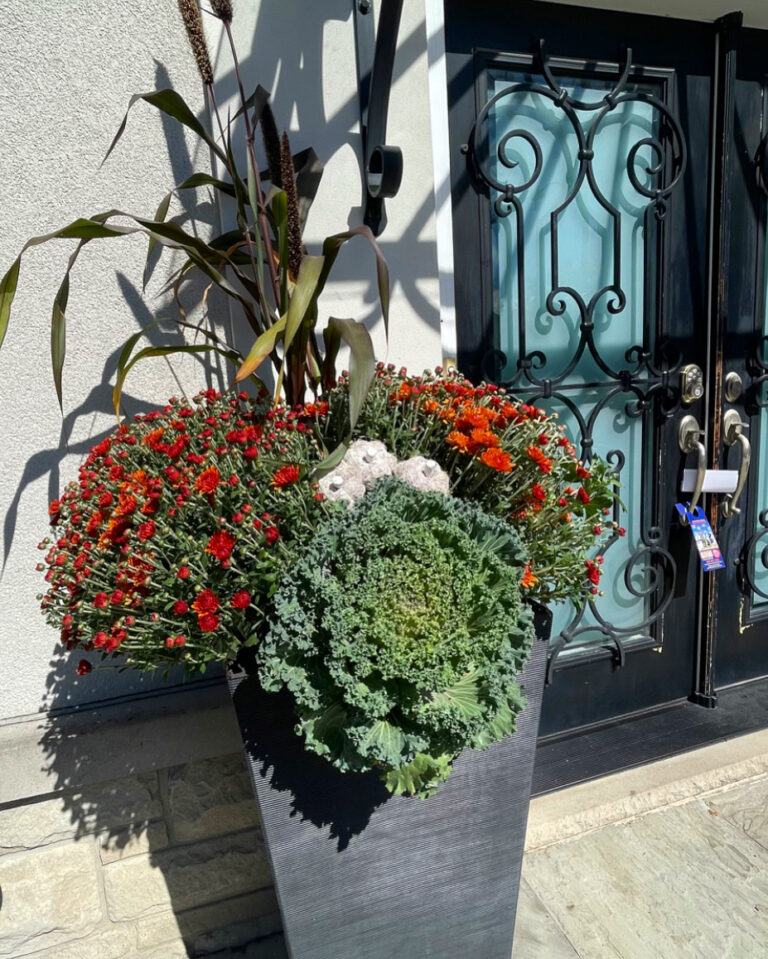
Palms and olive trees give easy height for summer. Boxwood balls and topiary cones work in every season and look at home on both traditional and modern entrances. Ferns suit a shady porch. For fall, faux grasses and berry stems add height to a living planter, and for winter, cedar, pine and eucalyptus fill a container that would otherwise sit empty until spring.
Look for realistic movement
Avoid placing every leaf in the same direction. Bend stems slightly, vary the height, and combine one fuller plant with one quieter supporting piece. Outdoor-rated options are especially important when the arrangement will see humidity or bright indirect light.
Before buying, check three things. The leaves should be matte, not shiny. The colour should vary a little from leaf to leaf, the way it does on a real plant. And a trunk or stem should have visible texture rather than smooth plastic. A piece that passes all three will look real from the sidewalk.
Use a real container
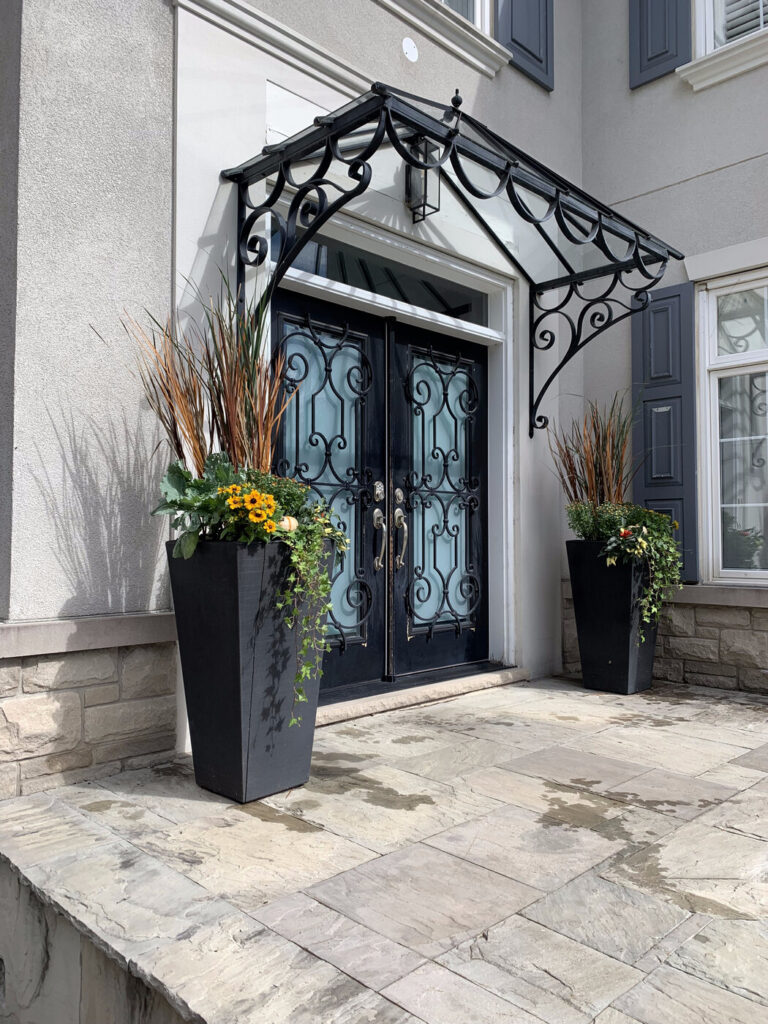
Even a convincing faux plant looks more polished in a substantial planter. Try a dark modern container for a clean look or a traditional vessel for a more established garden feeling.
Most faux plants arrive in a lightweight grower pot. Set that inside your planter, then fill the space around it with stones or sand so the plant cannot tip in the wind, and finish the top with moss, bark or real soil to hide the base. A faux plant that sits properly in a heavy container reads as planted. One that sits loose on top of it reads as decoration.
Keep it looking real
- Choose outdoor-rated pieces. Indoor faux fades quickly in direct sun. Look for pieces sold as UV-resistant.
- Rinse off the dust. A gentle hose-down every few weeks removes the dust and pollen that make faux look flat.
- Bring it in for winter unless it is rated for cold. Faux plants last years longer stored dry between seasons.
You can also browse faux greenery picks in my Amazon Canada storefront or visit my Amazon US storefront for more seasonal supplies.
Need help making faux greenery look natural in your space? Book a design consultation.
Read next: for a real planting that lasts the season, see the complete fall planter guide and the Christmas planter guide.