Christmas Planter Ideas 2026: A Designer’s Guide
The winter planter is the one that works hardest. It goes up in November and it is still standing in March, through the darkest four months of the year, in the one spot every visitor and every passing car looks at. It is on display roughly twice as long as the fall version.
It is also the one most people rush, because by the time they think about it the ground has frozen and the good cedar is gone.
This is the full guide to Christmas planters for 2026. When to build in Southern Ontario, how to beat the freeze, what to actually put in the pot, and how to make it read from the curb at four in the afternoon when it is already dark.
When to build Christmas planters in Ontario
Build after the first hard frost, which across Southern Ontario usually means the first two weeks of November.
Earlier feels productive and works against you. Cut evergreens put out in warm weather dry from the inside, drop needles and go dull by mid December. Once temperatures are consistently near or below freezing, cut greens essentially hold. They freeze rather than rot, which is why a winter planter outlasts every other season by months.
There is a hard stop on the other end. Once the soil in the pot freezes solid you cannot push a stem into it. In a bad year that happens in late November. Aim for the first half of the month and you have room to be wrong.
The freezing problem, and the fix
This is the single most practical thing to know about winter planters and almost nobody mentions it.
Your stems need to be anchored in something that will hold them for four months against wind. Soil does that beautifully once it freezes, and not at all once it has frozen without your stems in it.
- Get the stems in before the freeze. Push everything deep, deeper than looks necessary, while the soil still gives.
- Then water it once and walk away. The pot freezes into a solid block with your arrangement locked inside it. That is the goal, not a problem to avoid.
- If you are late, top the pot with damp sand or use floral foam rated for outdoor use. Both freeze the same way and give you a second chance.
- Never use a ceramic or terracotta pot you care about. Water expands when it freezes and it will crack. Fibreglass, metal, resin and concrete are the winter-safe options.
The structure, adapted for winter
The four layer formula from the fall planters guide still holds. What changes is the material in each layer.
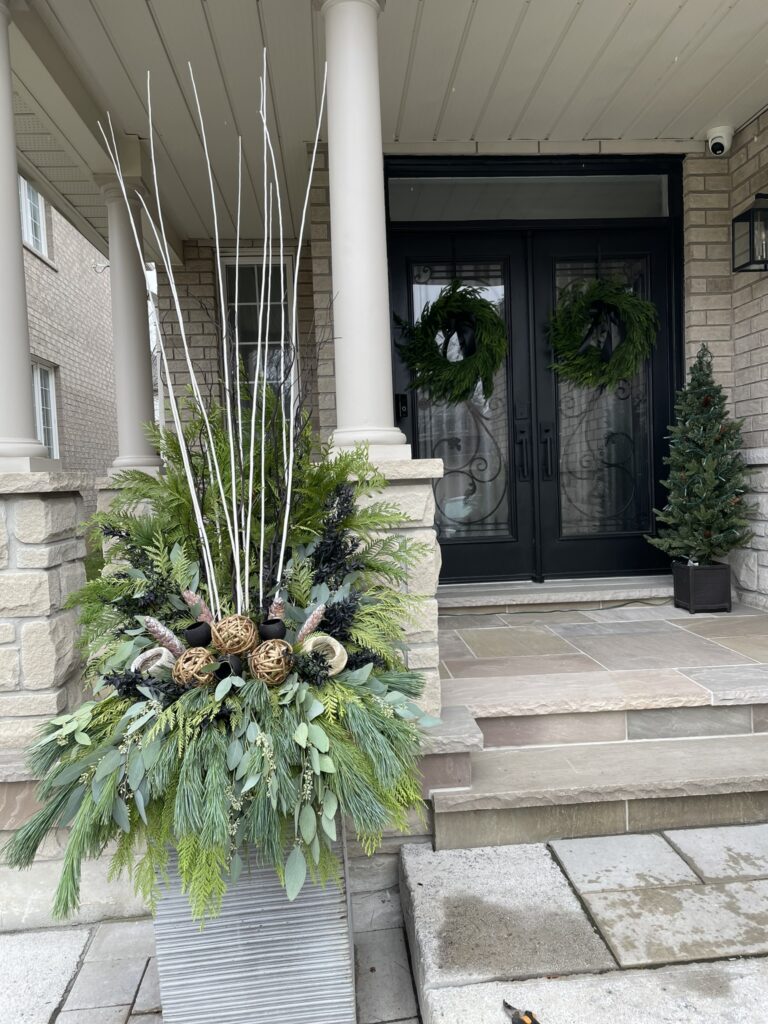
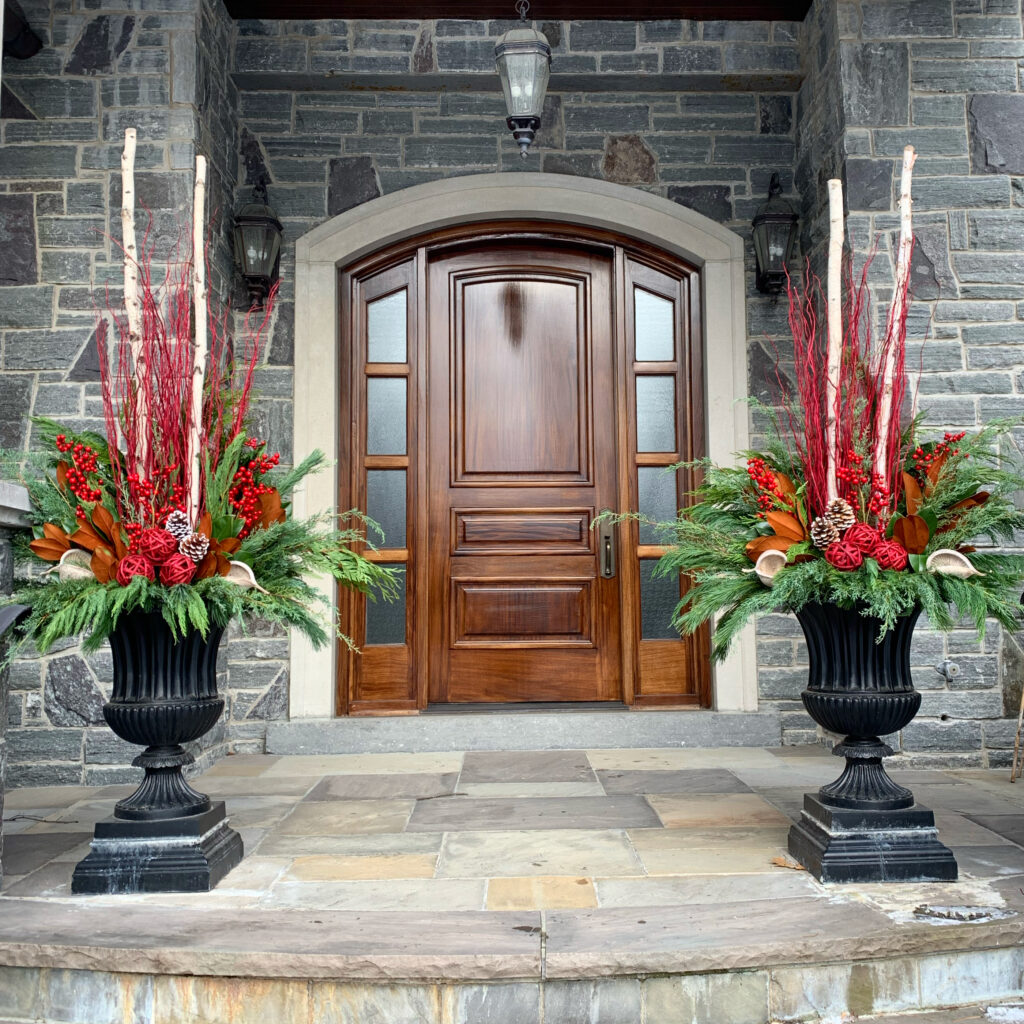
- Height at the centre. Birch poles, red or yellow twig dogwood, curly willow, or tall painted stems. This is the layer that reads from the street.
- Weight at the base. Cedar, white pine and fir, layered thickly and angled outward so the pot disappears under it.
- One focal point. A cluster of pinecones, a group of oversized ornaments, or magnolia turned to show the copper underside. One cluster, not scattered.
- Something that spills. Long cedar or pine draping over the rim and down the side of the pot.
The scale rule: your tallest stems should reach roughly one and a half to two times the height of the pot. Almost every disappointing winter planter is simply too short. Buy longer than feels right.
What goes in the pot
Evergreens
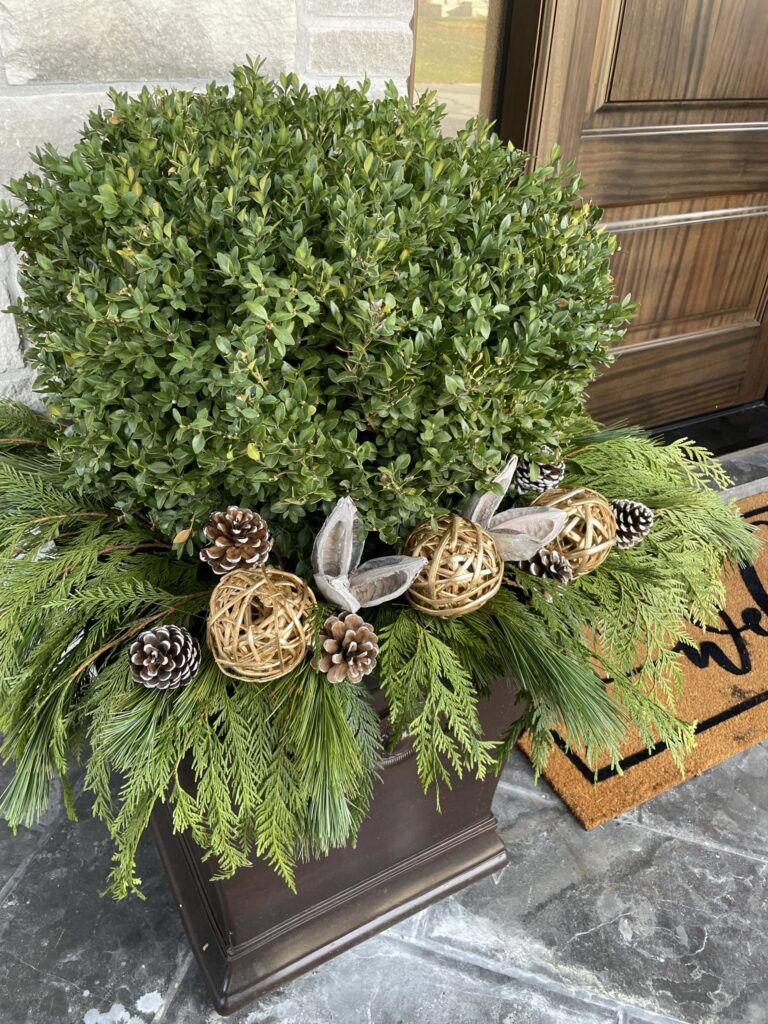
Cedar is the workhorse and the best value. White pine gives softness and length. Fir holds its needles longest and smells like the season. Boxwood adds a tight, formal texture that keeps an arrangement from looking wild. Mix at least three.
Structure and height
Birch poles for pale vertical lines against a dark door. Red twig dogwood for colour that lasts all winter without a single berry. Curly willow when you want movement rather than rigid lines.
The finishing layer
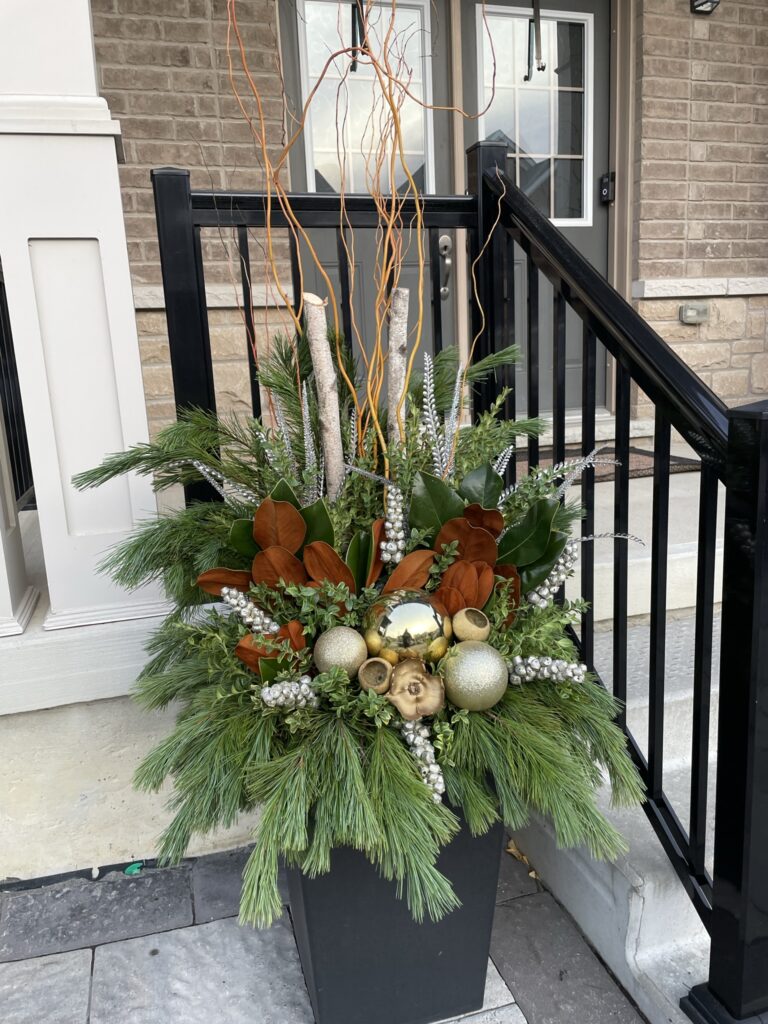
Magnolia is the one that makes an arrangement look professionally built, because the copper reverse of the leaf reads as warmth against all that green. Pinecones in a cluster, never sprinkled. Berries for the one hit of saturated colour. Faux is fine here and often better, because real berries drop.
Three palettes that work on a Canadian entrance
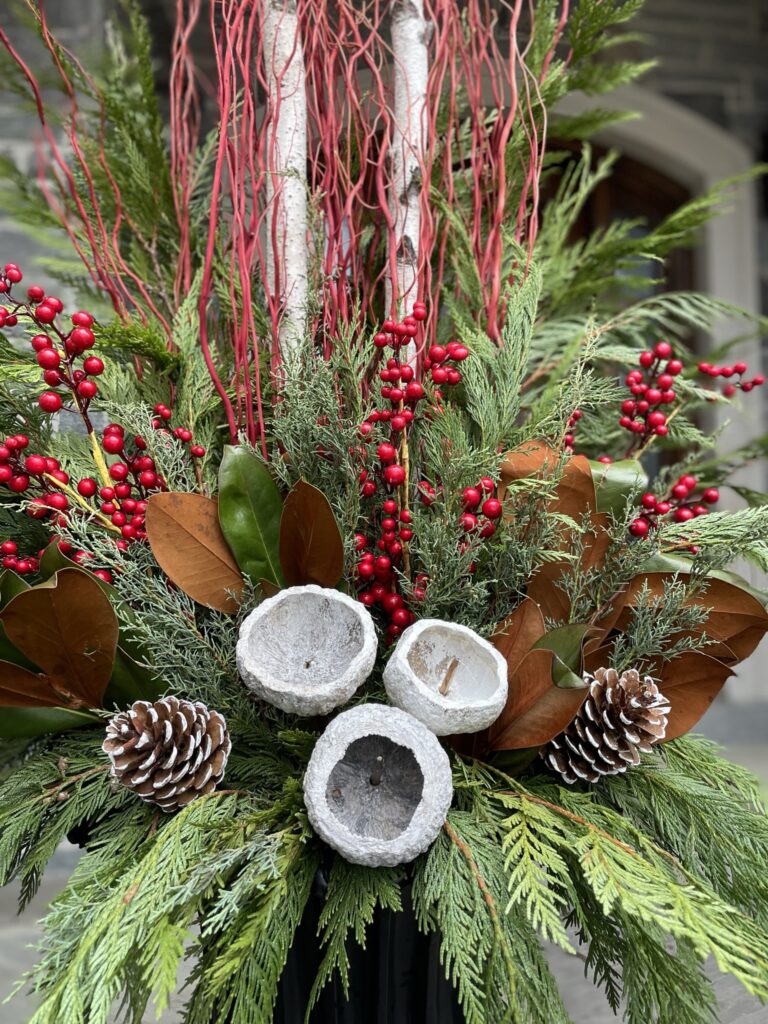
Classic Red and Cedar
Cedar, white pine, red berry clusters, pinecones. The one everyone pictures, and it earns its place. Best on white, grey or stone exteriors where the red is the only strong colour present.
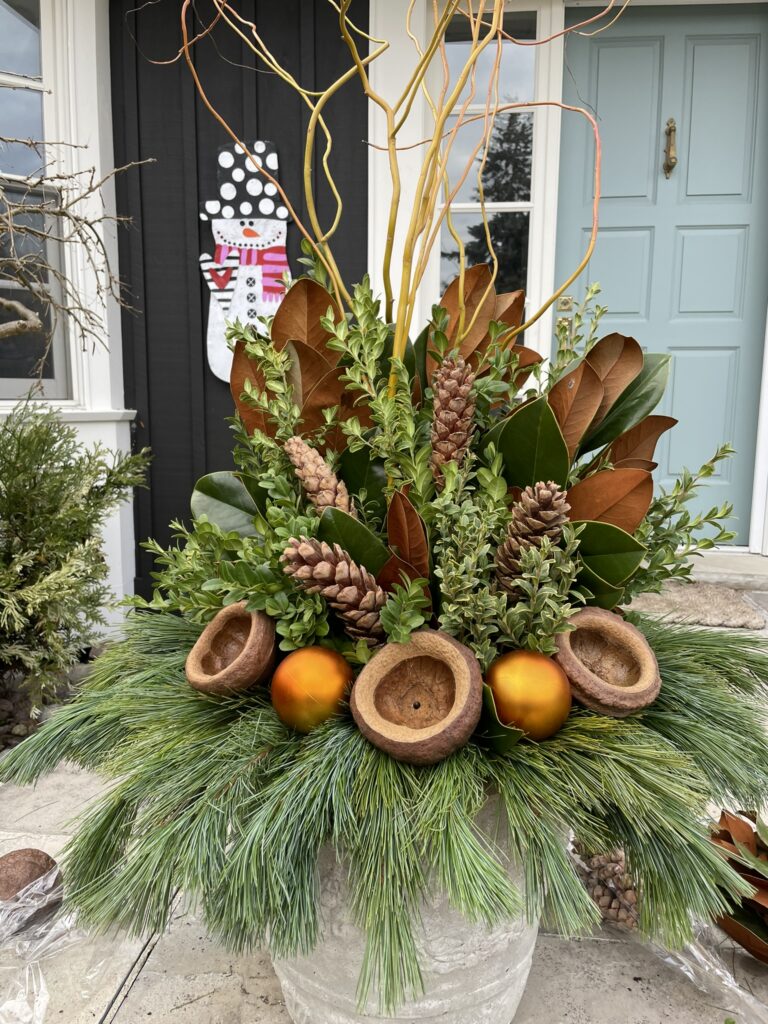
Copper and Magnolia
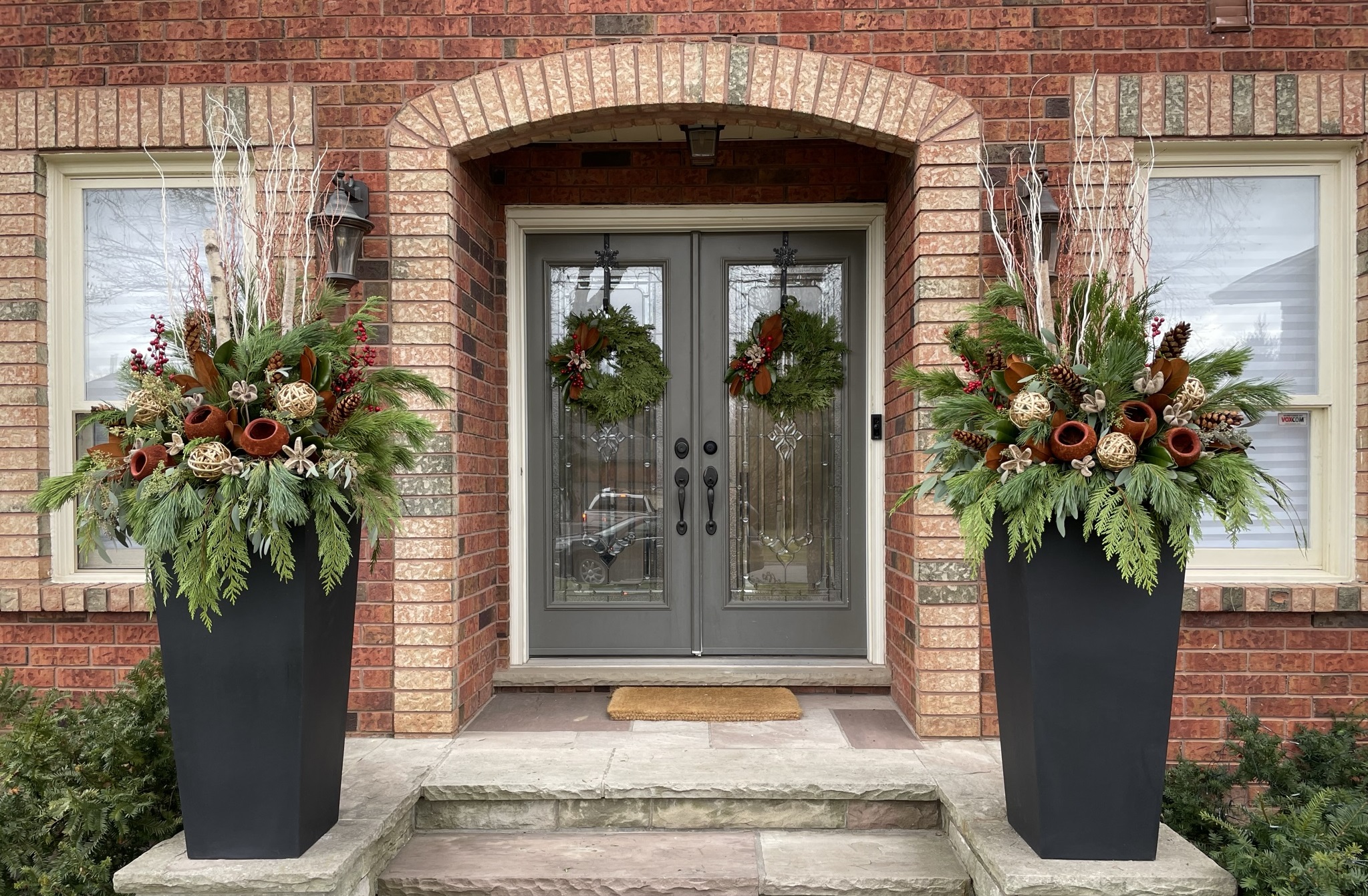
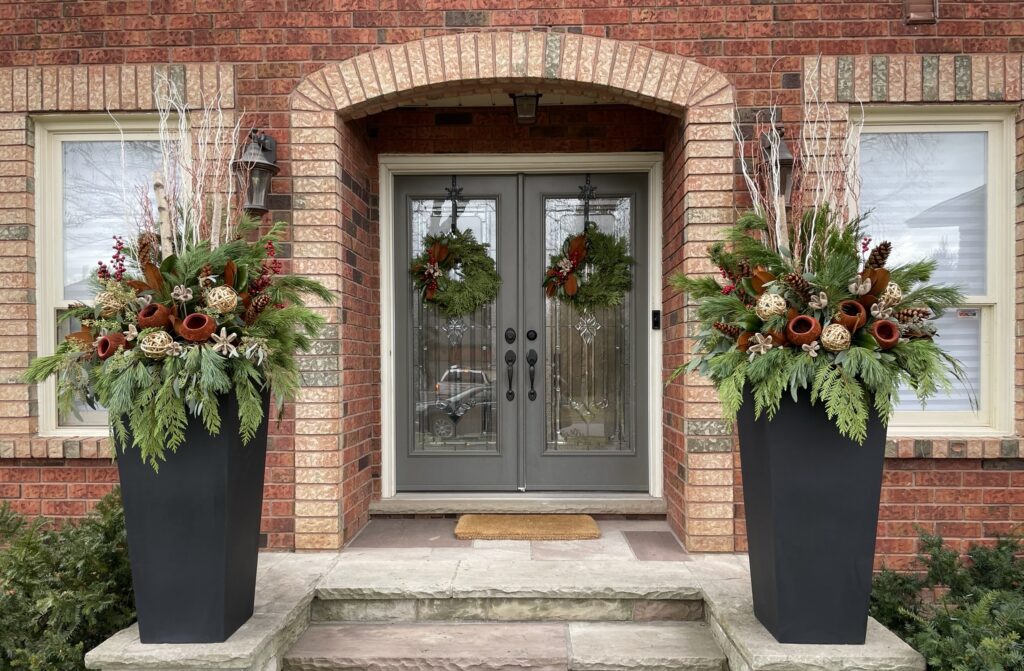
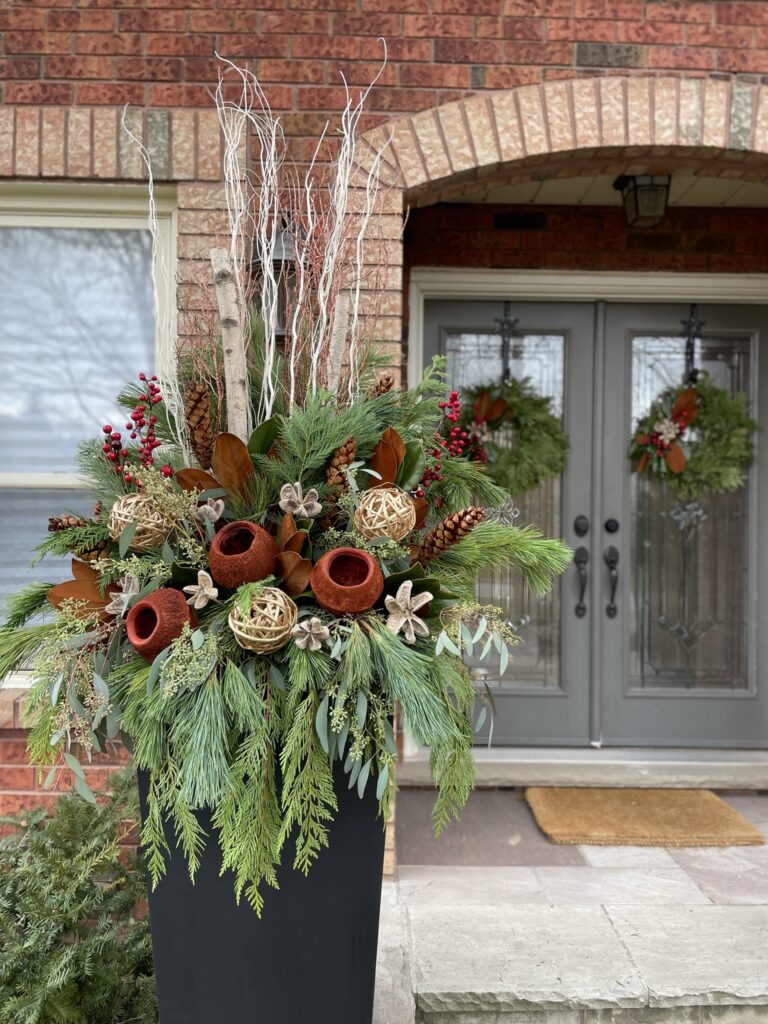
Magnolia turned copper side out, gold or bronze ornaments, birch, cedar. Warmer and quieter than red. This is the palette that works on red brick, which fights traditional Christmas red.
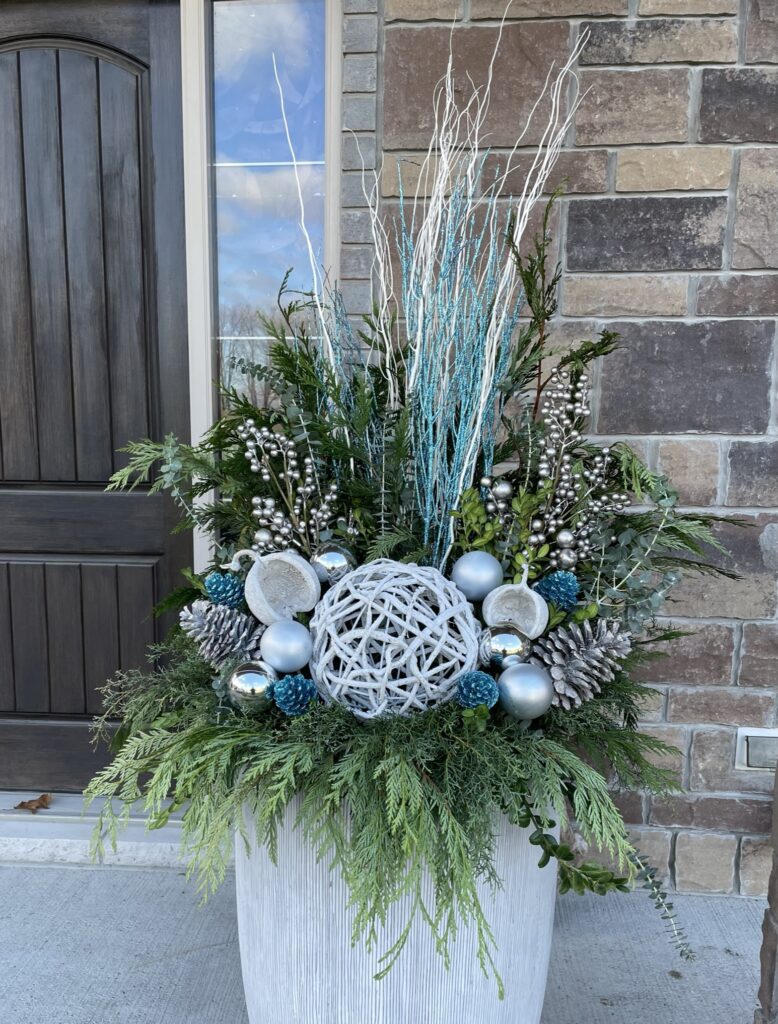
White, Birch and Silver
White-tipped stems, birch poles, silver or pearl ornaments, heavy evergreen. Reads clean and modern, and it is the strongest choice for a dark front door because it holds light instead of absorbing it.
If you want more on getting away from the default, what goes into a winter planter kit breaks down the components.
Plan for the dark, not the daylight
In December, Southern Ontario is dark by half past four. Most of the hours your planter is seen are hours without sun, and almost nobody designs for that.
- Battery lights on a timer, set to come on at dusk. Warm white, not cool white, unless the whole entrance is deliberately cool toned.
- Weave the lights deep into the greenery rather than draping them on top, so you see glow rather than wire.
- Pale materials do the heavy lifting after dark. Birch, white stems and silver read at night. Deep burgundy and forest green disappear.
- Everything must be outdoor rated, including ribbon. Indoor ribbon turns to pulp in the first thaw.
Coordinating the wreath and the planter
They should share materials, not match exactly. If the planter is cedar, pine and magnolia, the wreath should use at least two of those three. What breaks an entrance is a wreath in one palette and planters in another, both fine on their own, arguing with each other.
Scale matters as much as colour. A wreath that looks generous on the workbench often looks small on a full-size door. Measure the door and go up a size.
Making it last to March
A properly built winter planter does not get taken down after Christmas. It gets edited.
Pull the obviously festive pieces in early January, the red ribbon and the ornaments, and leave the evergreen, birch and pinecones. What is left is a winter arrangement rather than a Christmas one, and it will carry through until you are ready to build for spring. The same principle across the whole year is in One Planter, Four Seasons.
Common questions
When should I put out Christmas planters in Ontario?
The first two weeks of November, after the first hard frost and before the soil in the pot freezes solid. Cut greens hold beautifully in cold and dry out quickly in warm weather.
Do outdoor winter planters need water?
Water once at build, then leave them. The frozen soil holds the stems in place. Watering through winter does nothing useful and can heave the arrangement.
Will the greenery die?
Cut evergreens are already cut. They will not grow, but in Canadian cold they hold their colour and needles for months, which is exactly why winter arrangements outlast every other season.
Real greens or faux?
Real for the evergreen base, every time. Nothing faux matches the density and the smell, and real cedar is inexpensive. Faux is the better choice for berries, ornaments and anything that would drop or fade.
What size planter do I need?
Taller than you think. A pot under about 45 centimetres struggles to hold enough greenery to look full beside a standard front door, and a matched pair almost always beats one large statement piece.
Where to go from here
If you want this designed for your specific entrance, the Custom Porch Planter Design covers all four seasons, winter included, built around your light, your brick and your door.
Related reading: choosing the right urn planter for sizing and winter safe materials, and the complete fall planter guide for the season that comes before this one.
This year’s winter collection is the biggest we have built, and the mailing list sees it first in early November, before any of it goes public. If you are not on it, the subscribe box is just below.