Urn Planters: How to Choose the Right One for Your Front Door
An urn is the one container that can make an entrance look finished before anything is planted in it. It is also the container people most often buy two sizes too small, in a material that will not survive a Canadian winter, and then fill like a flower pot.
This is what actually matters when you choose one: proportion, material, how many, and what goes in it across the four seasons.
What makes an urn an urn
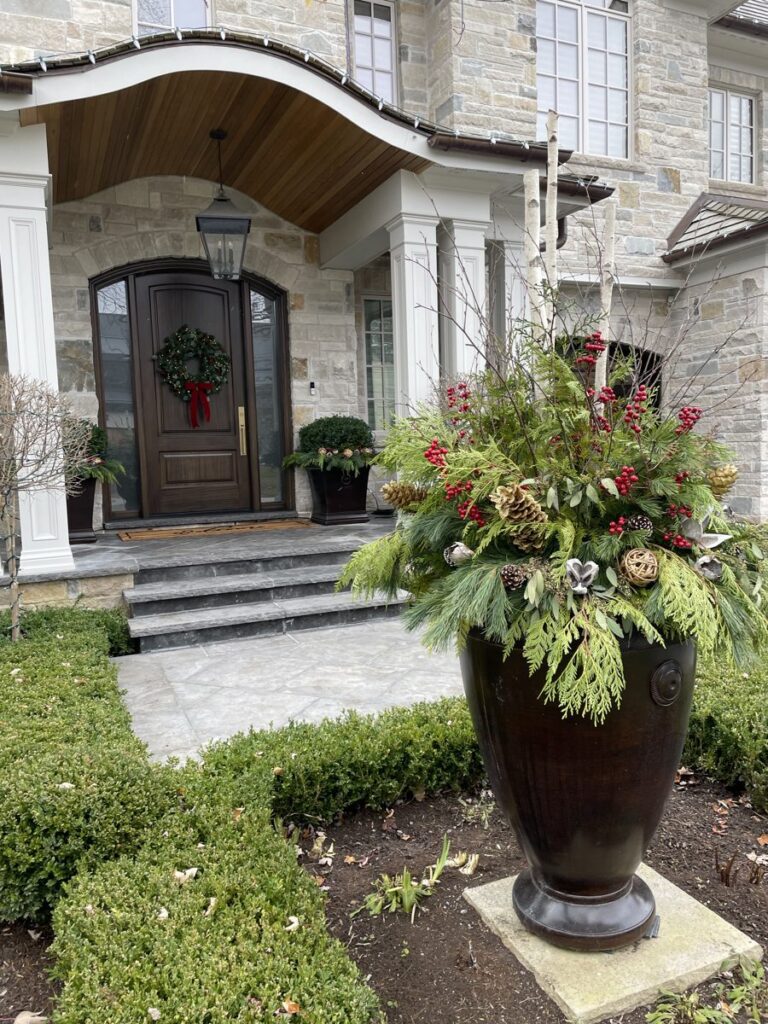
An urn is not just a large pot. It has a pedestal foot, a waist that narrows, and a lip that flares back out. That silhouette is why it reads as furniture rather than as a container, and why it holds an entrance on its own.
The shape is also functional. The foot lifts the planting closer to eye level, so you see the arrangement instead of looking down into it. The flared lip gives trailing plants somewhere to spill without swallowing the container. A straight-sided pot of the same volume will always look smaller and busier.
Size is the mistake almost everyone makes
Nine times out of ten the urn is too small. It happens because you judge it in a garden centre aisle, surrounded by other pots, instead of against a two storey house.
Two numbers to work with. Against a standard 80 inch front door, an urn wants to stand roughly 24 to 30 inches tall on its own. The planting then adds another 18 to 24 inches, so the whole thing lands somewhere around half the height of the door. Below that it reads as an accessory. At that height it reads as part of the architecture.
The second number is width. The widest point of the urn should be at least a third of its total height. Anything narrower looks spindly no matter how well you plant it.
When you are between two sizes, take the larger one. A slightly oversized urn looks deliberate. A slightly undersized one looks like a mistake, and no amount of planting fixes it.

Choose a pot rated for winter
Look for the maker’s outdoor winter rating and follow the care instructions for that particular container. Fibreglass, composite, metal, stone and ceramic all vary between products. The material name alone is not a promise that the pot will tolerate freezing conditions.
Check for cracks and clear the drainage before building. Move a container indoors if its instructions call for protected winter storage. Rooted plants also need a container and winter care suitable for their hardiness and moisture needs.
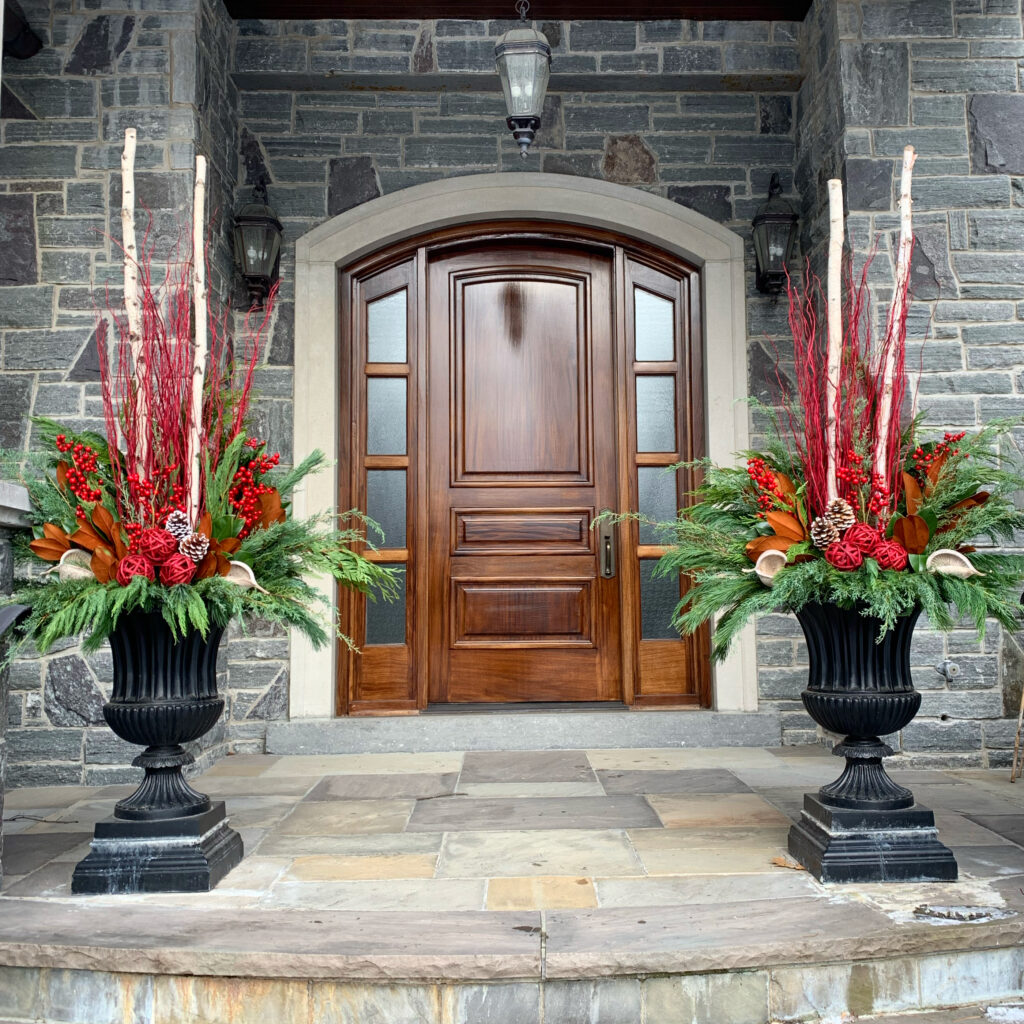
Matching the urn to your door
Choose the container for the architecture first, then build the planting around it. The reverse almost never works.
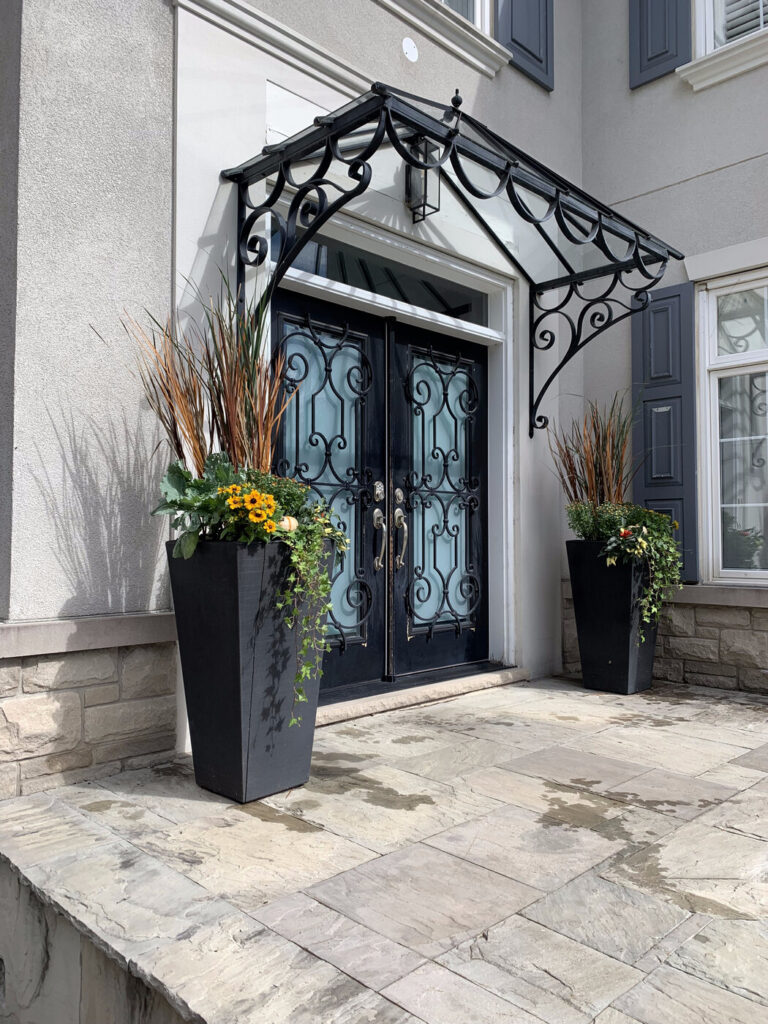
- A dark front door needs light at the base or the entrance reads as a hole. Either a pale urn, or a dark urn with cream and white in the planting.
- Red or orange brick fights warm terracotta tones. Go charcoal, bronze, or cream instead.
- Grey or white stone takes almost anything, which is exactly why so many grey houses end up with a muddy result. Pick a lane and commit.
- Traditional architecture carries a fluted classical urn comfortably.
- A modern flat panelled door looks better with a straight sided tapered container than with a classical urn, even though both are the same size.
There is more on reading your own entrance in the fall planter guide, under starting with the front of the house.
One urn, or a pair
A pair frames a door. A single urn is a focal point, and it needs a spot that justifies being looked at.
If the door is centred and the porch is symmetrical, use a pair and make them identical. If the entry is off centre, or there is only one usable landing, one large urn will always beat two small ones squeezed in. Two undersized urns is the most common way an entrance ends up looking cluttered rather than composed.
Never three. Three urns at a front door reads as a display, not an entrance.
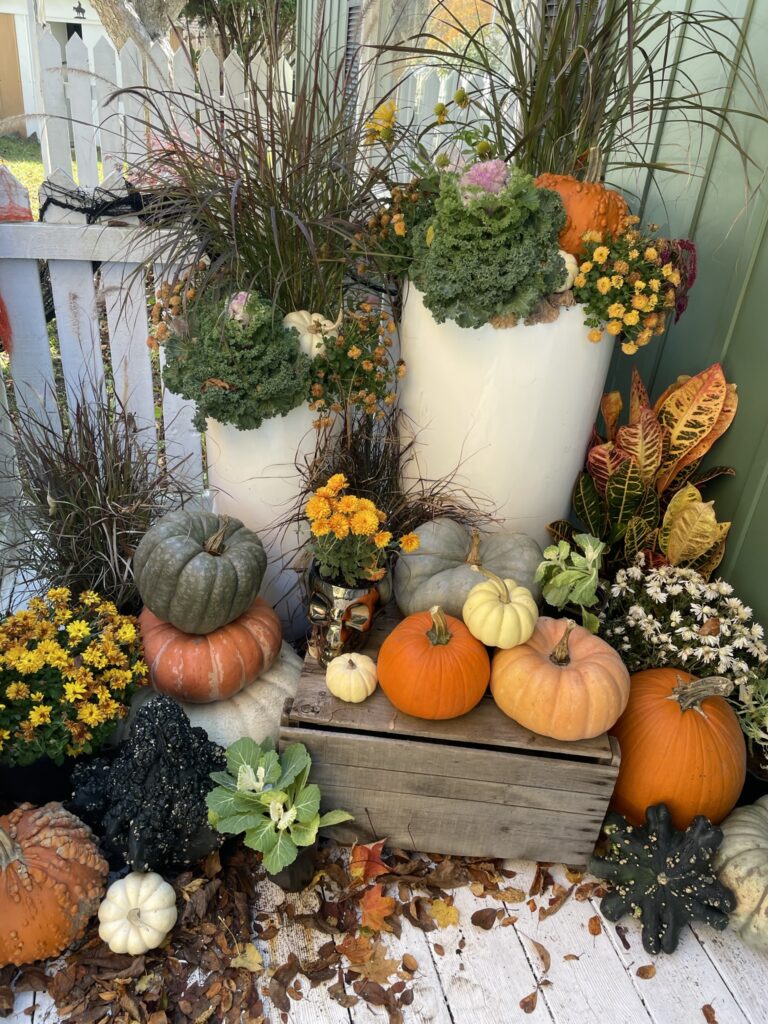
Planting an urn across four seasons
The reason an urn is worth the money is that it works twelve months a year. The container stays. Only the contents change.
Spring
Pussy willow or dogwood for height, tulips and pansies underneath, and moss to cover the soil. Cool weather annuals go in weeks before anything tender can, which is what makes an entrance look awake before the neighbours do.
Summer
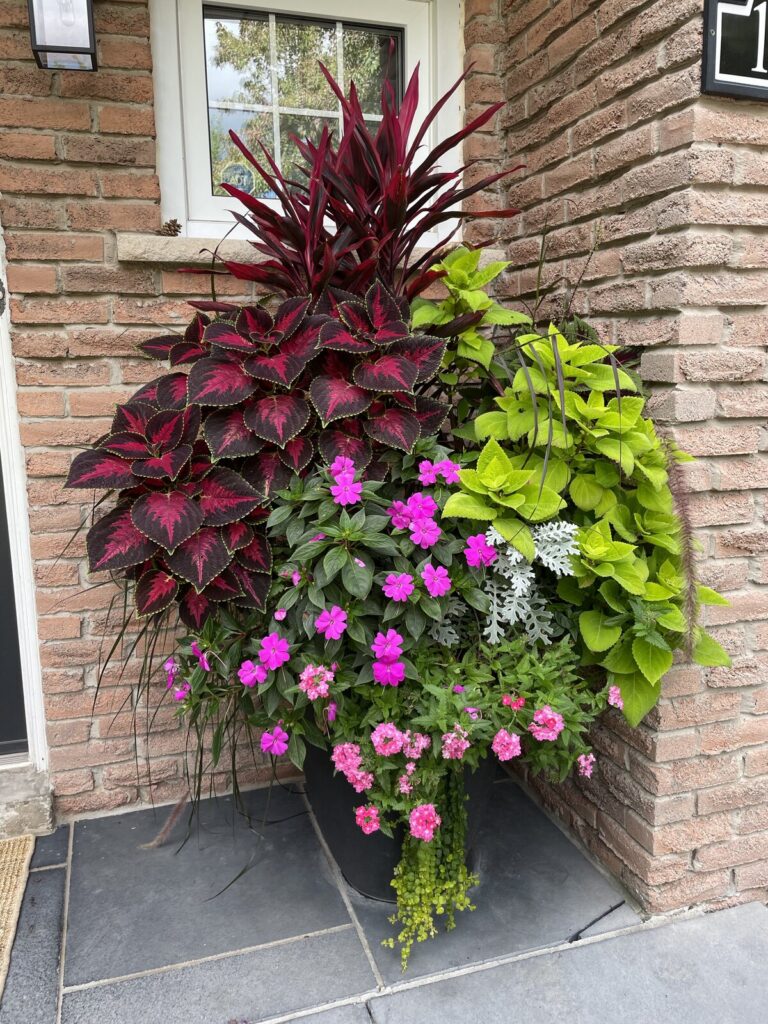
This is the season the flared lip earns its keep. A standard tree or tall grass in the centre, something substantial filling the middle, and sweet potato vine or trailing verbena over the edge.

Fall
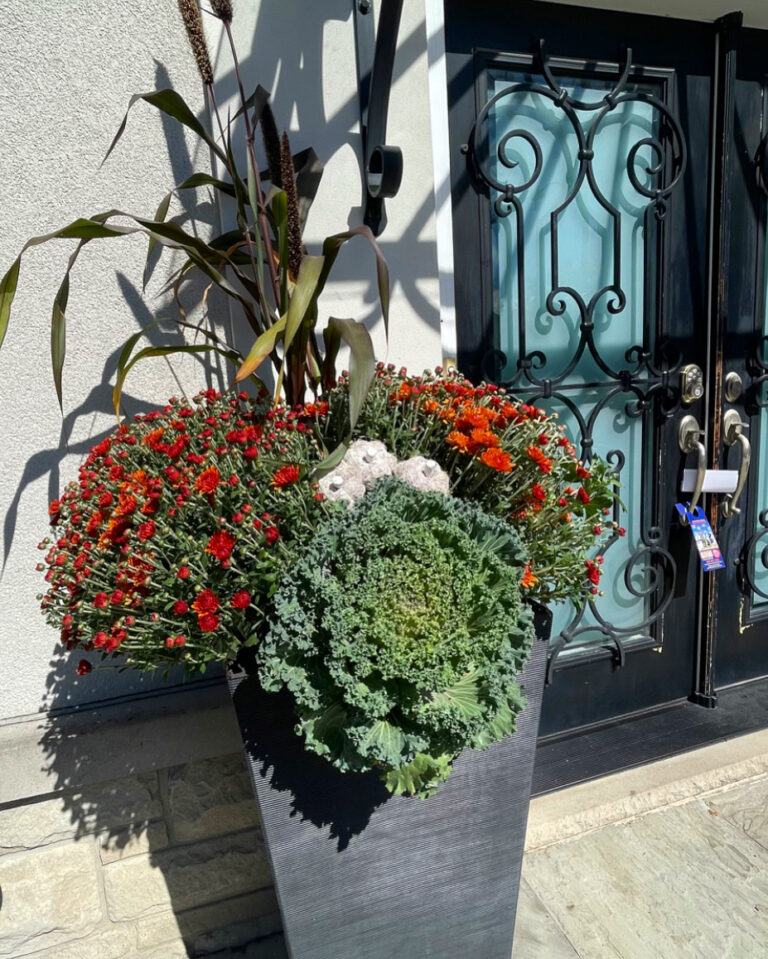
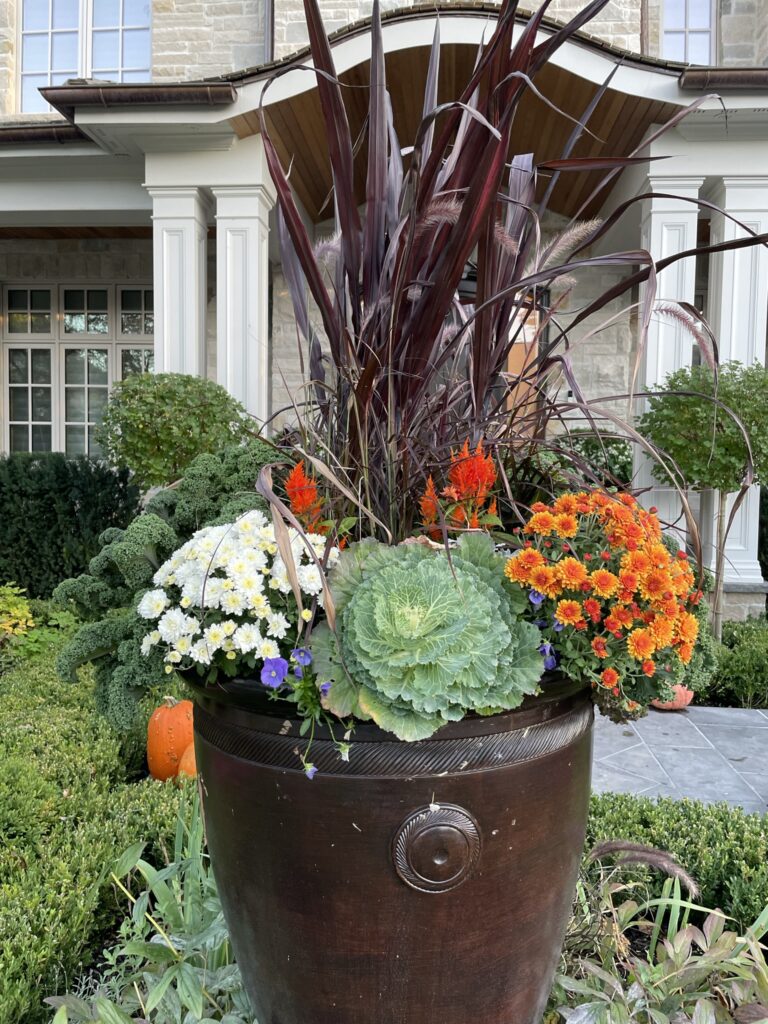
Ornamental kale and cabbage, burgundy fountain grass for height, and mums or celosia for colour. Kale is what carries the arrangement into November after the mums have finished. The full method is in the fall planter guide.
Winter
Cut cedar, pine and other evergreen, tall birch or willow, texture and a few focal pieces can give the entrance its winter shape. Build in cool weather while the soil is still workable, using your local forecast rather than a fixed calendar date. After inserting the cut stems, water the soil thoroughly and let excess water drain; during thaws, water only if the soil is drying out and drains freely. Do not water frozen or waterlogged soil. Refresh tired stems as needed.
The Christmas planter guide and free winter mini guide explain the build and current care advice.

Drainage, and why urns crack
Almost every cracked urn in this climate cracked for the same reason: water sat in it and then froze.
- Keep drainage open. Follow the maker’s drainage instructions. Do not drill a pot unless its manufacturer says it is suitable.
- Lift it off the ground. Pot feet or a couple of shims stop the base sitting in a frozen puddle all winter.
- Give the stems enough soil. Cut branches need a deep, secure anchor in workable soil near the rim. Do not assume a shallow cap of soil will support a tall winter arrangement.
- Avoid standing water. Follow the container’s winter instructions. After inserting the cut stems, water the soil thoroughly and let excess water drain. Check moisture during thaws.
Common questions
What size urn planter do I need for a standard front door?
For an 80 inch door, an urn 24 to 30 inches tall, with the planting bringing the total to roughly half the door height. If you are choosing between two sizes, take the larger.
Can I leave an urn planter outside all winter in Canada?
Check the manufacturer’s winter rating and care instructions for the particular pot. Drainage and exposure matter, and the material name alone does not give you the answer.
How do I stop my urn planter from blowing over?
Choose a stable pot for the location and secure the stems deeply. Follow the maker’s guidance about added weight, keeping drainage clear. Move or protect a vulnerable arrangement before severe wind.
What do you put in the bottom of a tall urn planter?
Follow the container’s design and instructions. For cut winter branches, allow enough workable soil for deep anchoring. For rooted plants, the soil volume needs to suit the roots. Keep the drain unobstructed.
Do urn planters need to match each other?
If they flank a door, yes. A near match reads as a mistake in a way that two obviously different containers on opposite sides of a porch does not.
Where to go from here
If you know the container and want the planting, the fall planter guide and the Christmas planter guide cover both seasons in full. Ready made winter planter kits are in the shop, sized for a standard urn.
If you would rather not work it out yourself, the Custom Porch Planter Design is a four season plan built for your specific entrance, container included in the recommendations.