Self-Watering Planters: A Practical Choice for Busy Homes

Disclosure: This post contains affiliate links. If you shop through them, The Wreath Coach may earn a commission at no extra cost to you.
Self-watering planters are useful when a porch gets strong sun, travel makes regular watering difficult, or you simply want a little more consistency from your containers. They do not replace good plant choices, but they can make a seasonal arrangement easier to maintain.
How they work
A self-watering planter has a water reservoir built into its base, separated from the soil by a platform. A wick or a column of soil reaches down into the water and draws moisture up to the roots as they need it. You fill the reservoir through a tube at the top, and an overflow hole in the side stops it from filling past the right level, which matters on an open porch in a heavy rain.
The result is soil that stays evenly moist rather than swinging between soaked and bone dry. That consistency is what makes them so useful.
Where self-watering planters help most
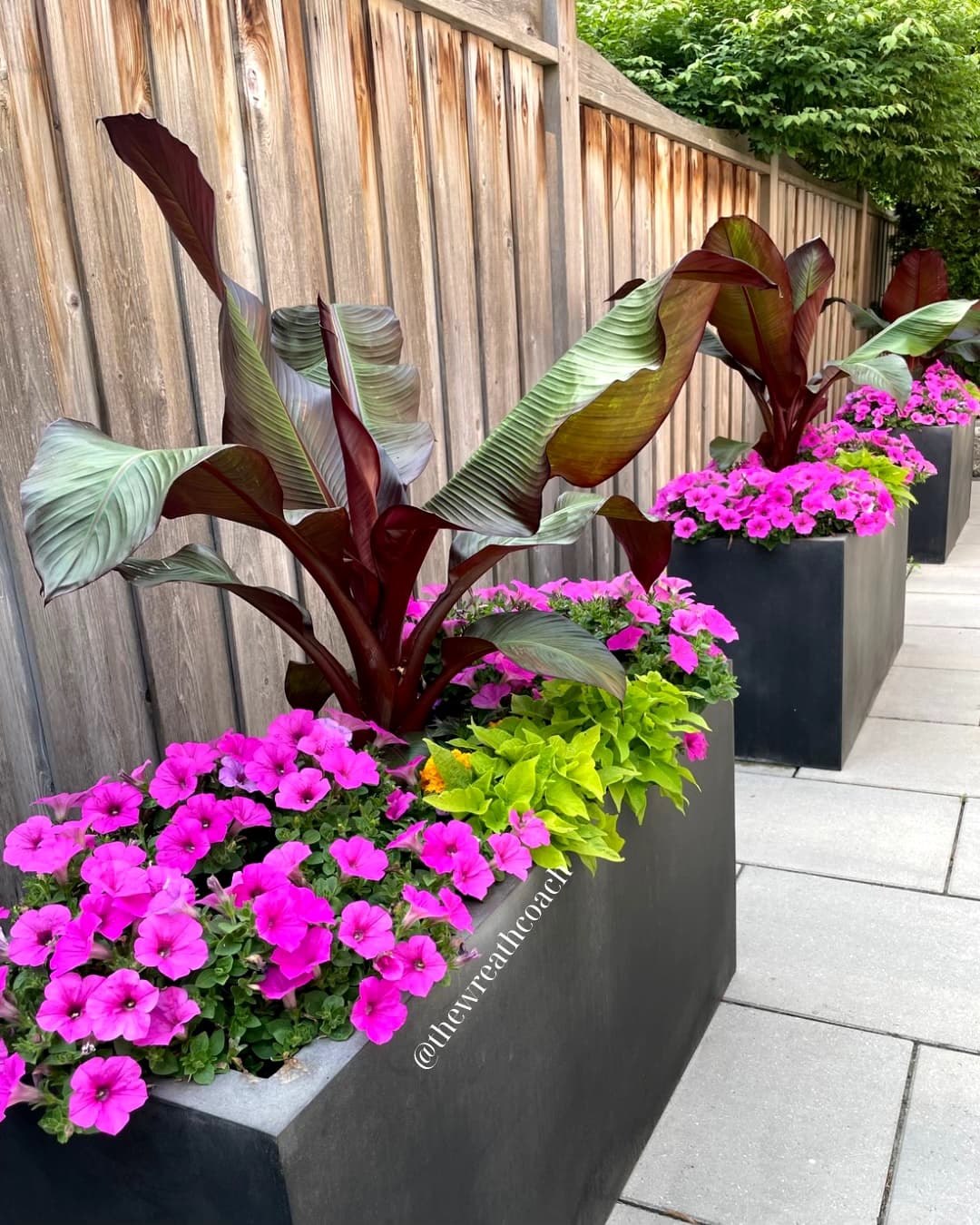
They are especially useful near a front door, on a balcony, or in a sunny spot where containers dry quickly. Start with the self-watering planter collection and compare the reservoir style, container depth, and overall footprint.
They are less suited to plants that like to dry out between waterings, such as succulents, rosemary and lavender, which can sulk in soil that never gets the chance.
Choose plants that still match the light
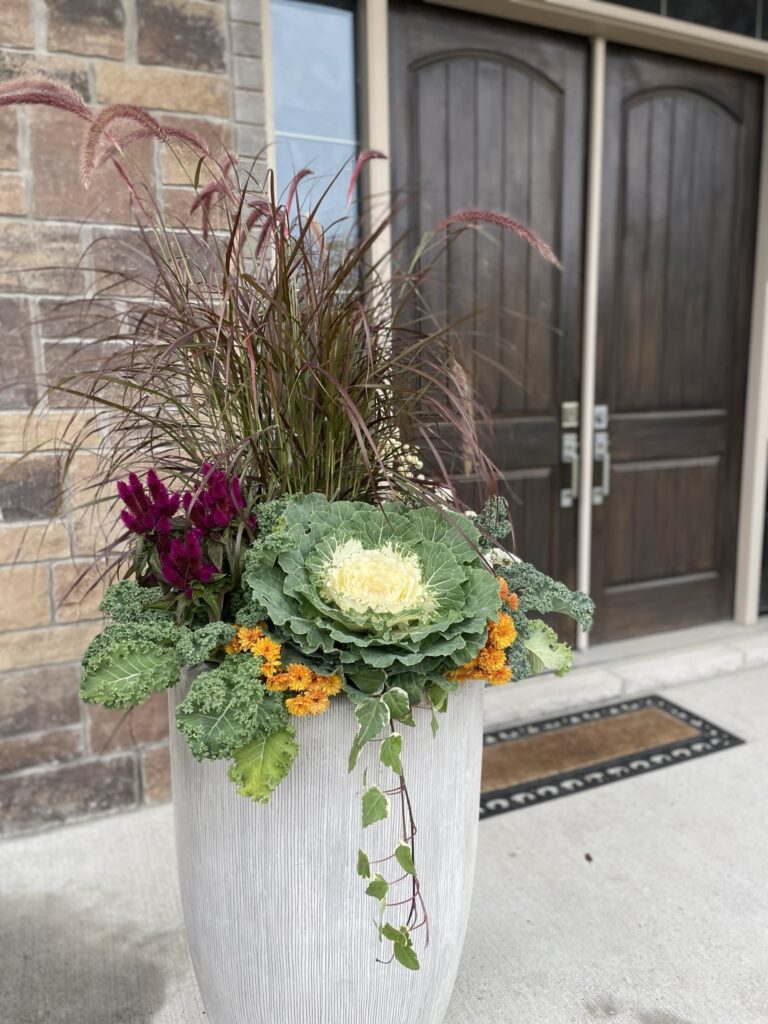
A water reservoir cannot correct the wrong light conditions. Match your plants to the exposure first, then choose a container that gives the roots enough room. For a mixed arrangement, combine one structural plant with a spiller and a seasonal accent.
Planting one properly
- Use potting mix, not garden soil. Garden soil is too dense to wick water evenly and compacts in a container.
- Water from the top at first. For the first couple of weeks, until the roots reach down towards the reservoir, water the soil surface as well as filling the tank.
- Feed lightly and flush now and then. Because water does not drain through the soil in the usual way, fertilizer salts can build up. Every few weeks, water from the top until it runs out of the overflow.
Make the arrangement look designed
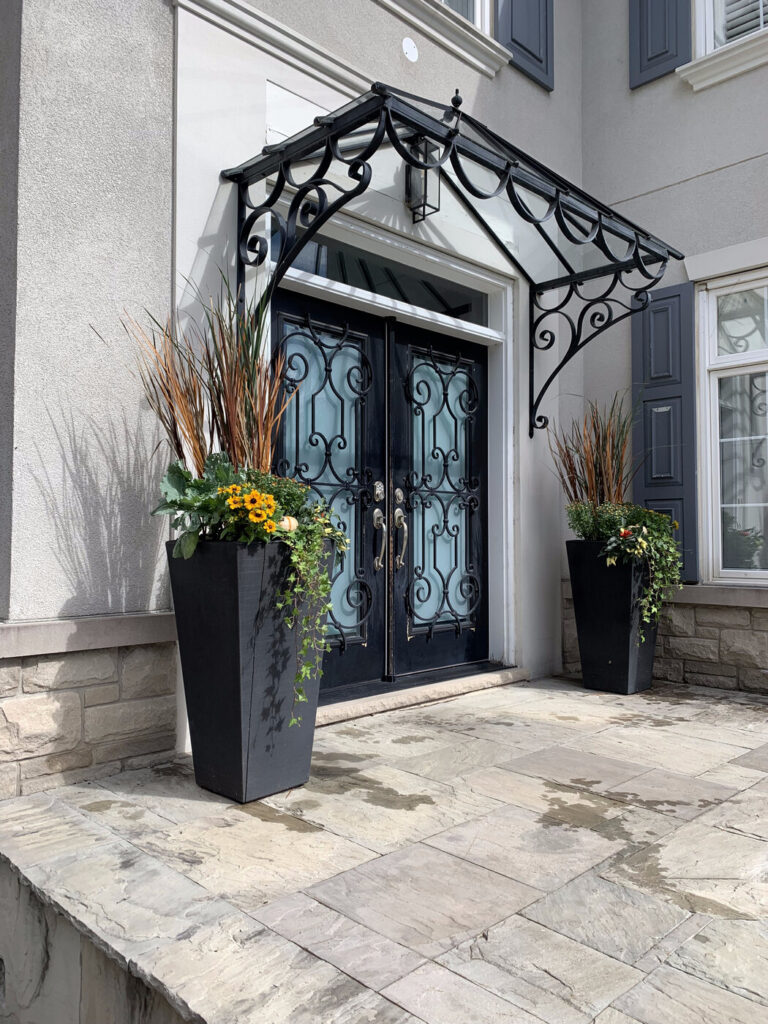
- Keep the container finish consistent with the entryway.
- Repeat one foliage colour through the arrangement.
- Use one focal bloom or accent rather than too many small details.
- Check the reservoir instructions before the first full watering.
Before winter
In Ontario, a reservoir full of water will freeze, and ice can crack the planter from the inside. At the end of the growing season, drain the reservoir completely. If the planter will carry a winter arrangement of cut greens, keep the tank empty and let the greens sit in soil or foam rather than water.
For additional planter ideas, browse my Amazon Canada shop and my LTK planter collection.
Want a planter designed around your porch and maintenance routine? Book a consultation.
Read next: the urn planter guide covers drainage, materials and why containers crack in a Canadian winter.
Where to go next
Keep reading: How to Choose a Planter Palette for the Front of Your House, One Planter, Four Seasons: The Same Spot, Reimagined and Three Spring Planter Color Palettes to Try This Season.