Fall Planters 2026: The Complete Front Porch Guide
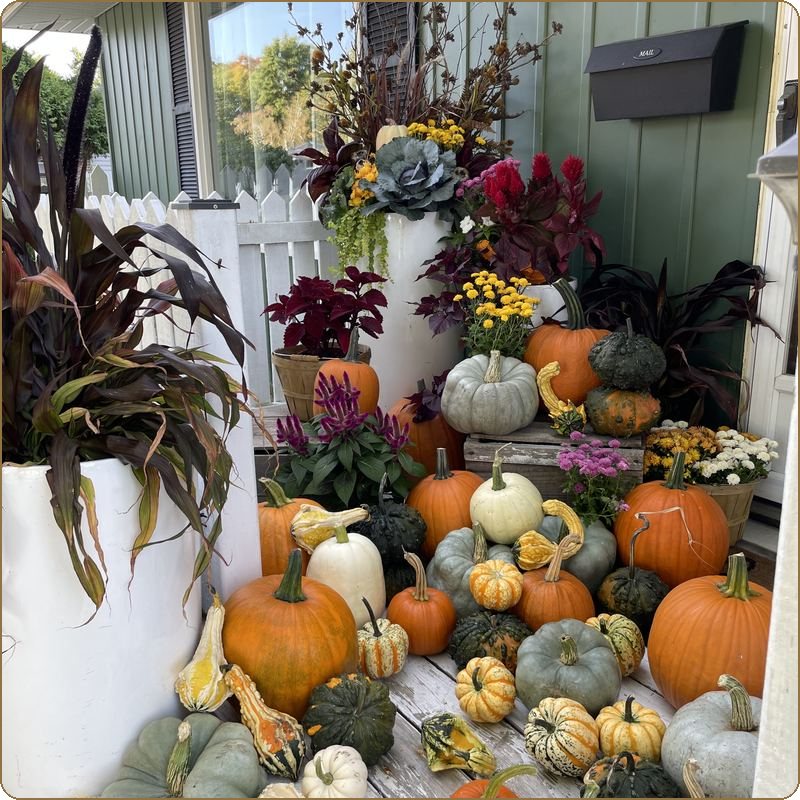
Every September the same thing happens. The light turns golden, the air goes crisp, and half the neighbourhood walks out to the garden centre, buys three orange mums, puts them in a pot and calls it done.
Nothing wrong with mums. But a planter that looks designed rather than decorated comes down to a handful of decisions made before you buy anything: what the front of your house is actually asking for, which plants hold through a cold Ontario October, and how the layers stack.
This is the full guide to fall planters for 2026. Timing, palettes, plant choices, and the accents that separate a styled entrance from a pot of orange flowers.
When to plant fall planters in Southern Ontario
The window is narrower than people think.
Build in the first two weeks of September. Summer annuals are leggy and tired by then, night temperatures have dropped enough that mums and kale settle in properly, and you get the full run of colour before anything gets hit.
First frost across Southern Ontario lands somewhere between the middle and end of October, earlier if you are north of the lake and later if you are close to the water. That gives a well built fall planter roughly six to eight weeks of peak, and considerably longer if you chose the right plants.
Build too early, in August, and the mums bloom out before Thanksgiving. Build in October and you have paid full price for three good weeks.
Start with the front of the house, not the pot
This is the step most people skip, and it is the one that decides whether the planter looks intentional.
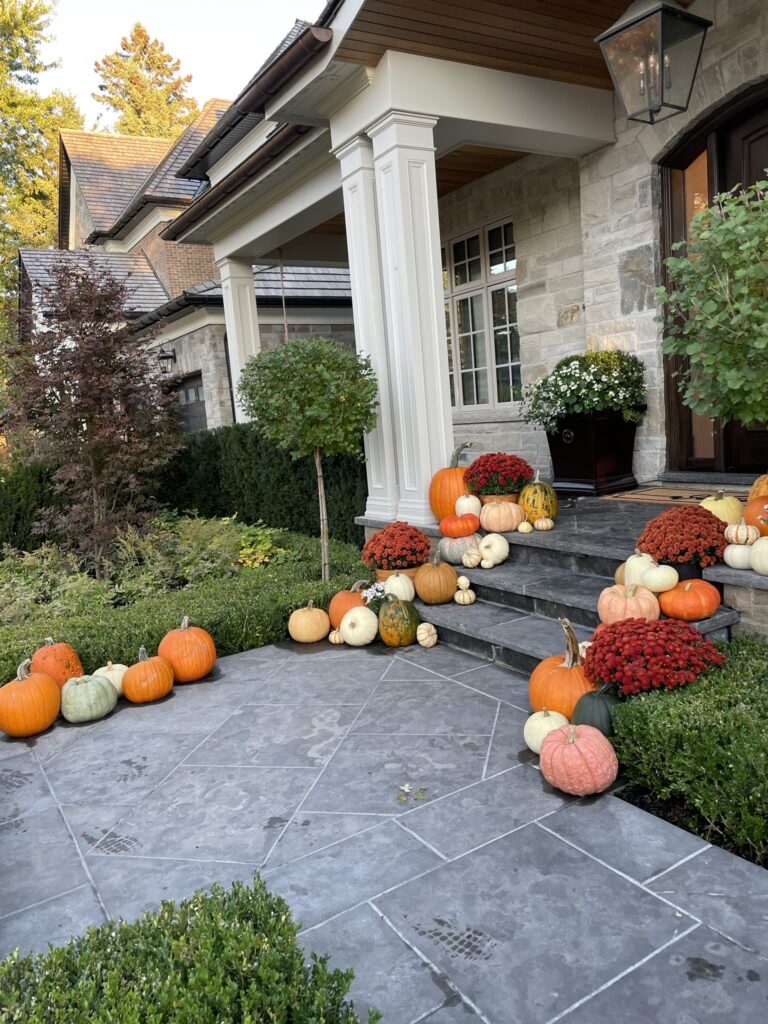
Walk to the end of your driveway and look back. What you are reading from there is brick or stone colour, door colour, and how much light the entrance gets. Those three things narrow the palette before you have touched a plant.
- Red or orange brick fights bright orange. Go deeper: burgundy, rust, cream, and a lot of green.
- Grey or white stone takes almost anything, which is exactly why so many grey houses end up with a muddy planter. Pick a lane and commit to it.
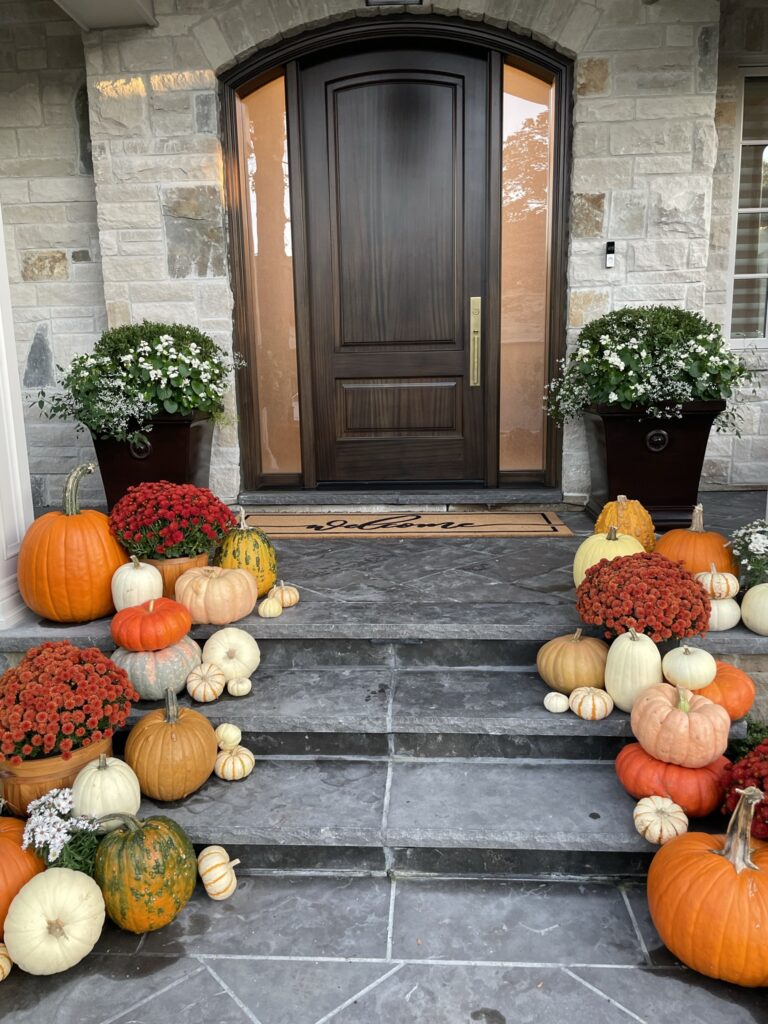
- A dark front door needs light at the base or the whole entrance reads as a hole. Cream kale, white pumpkins, pale grasses.
- A shaded porch loses saturated colour to shadow. Lean lighter and rely on texture instead of brightness.
The pot itself should be the quiet part. Tall and simple beats ornate almost every time, and a matched pair flanking the door does more work than one large statement piece.
The four layer formula
Every full planter I build has the same four jobs in it. Nothing more complicated than that.
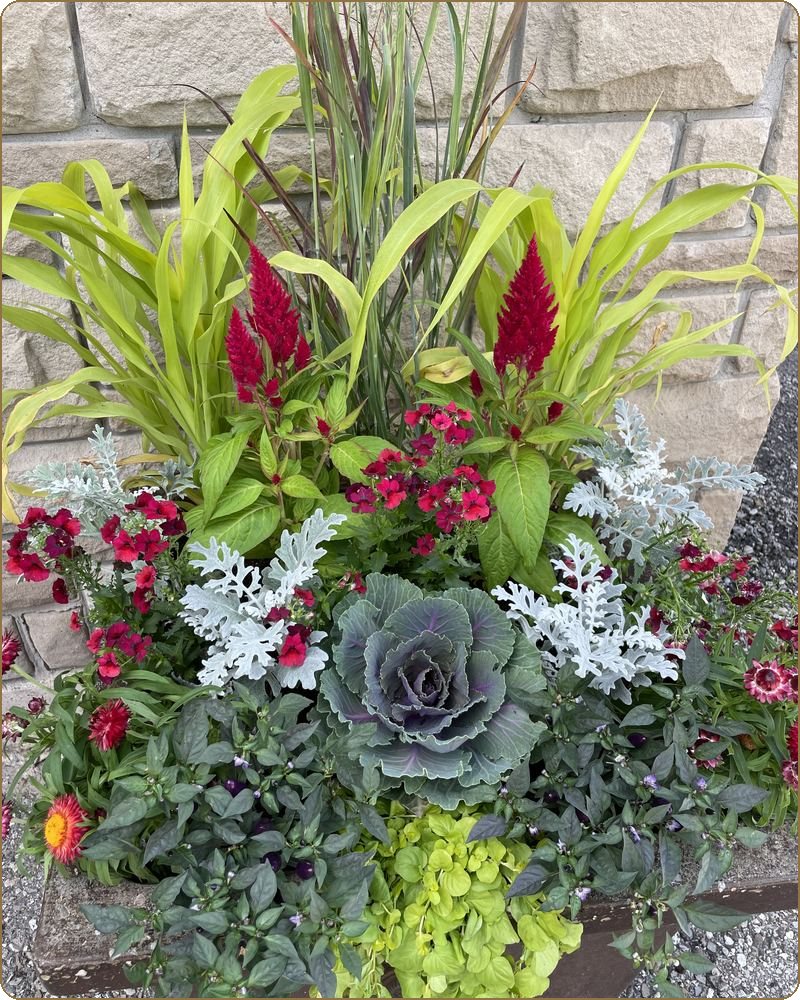
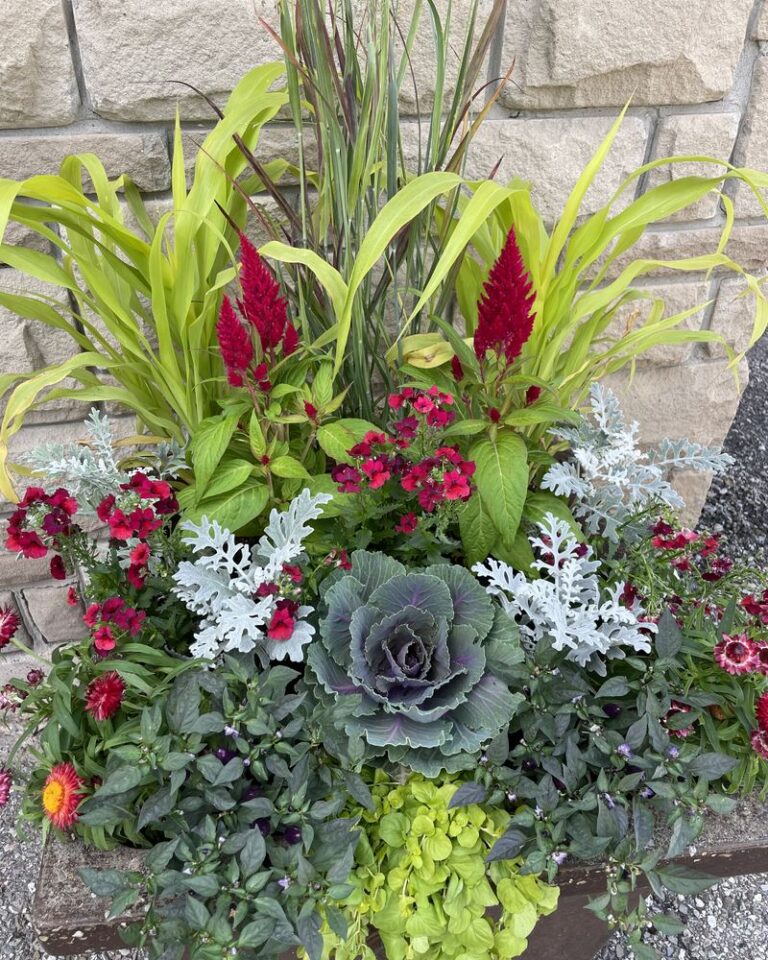
- Height at the centre. An upright branch, tall grass, or cedar. This sets the scale.
- Weight at the base. The fuller middle layer that hides the mechanics and makes the whole thing read as solid rather than sparse.
- One focal point. A pumpkin, a lantern, a berry cluster. One. The moment there are three competing focal points there are none.
- Something that spills. Trailing greenery over the rim so the planter does not stop abruptly at the edge.
Build from the back forward so every layer has a job. If you want the step by step version of this, it is laid out in The Simple Formula for a Full Fall Planter.
Fall planter colour palettes for 2026
The shift this season is away from flat orange and toward layered, tonal warmth. Rust instead of bright orange. Deep burgundy over flat red. Golden ochre over pale yellow. It photographs better and it reads from the curb, which flat colour does not.
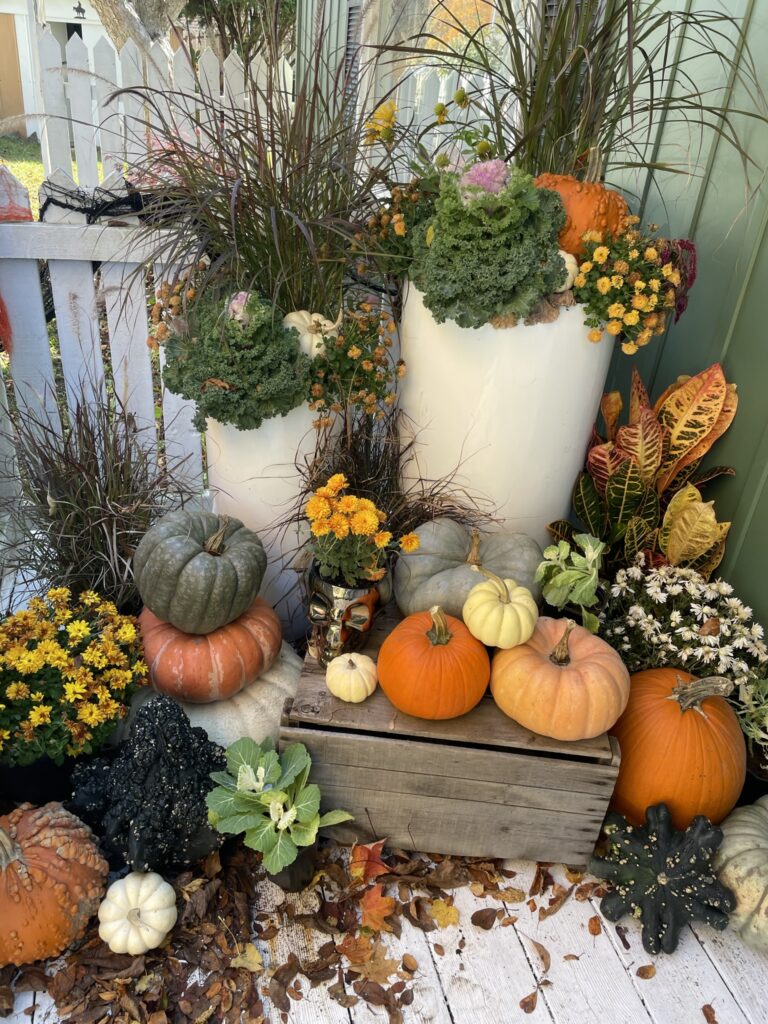
Harvest Glow
Rust, bronze grass, and green kale. The safest of the four and the one that works on the widest range of house colours.
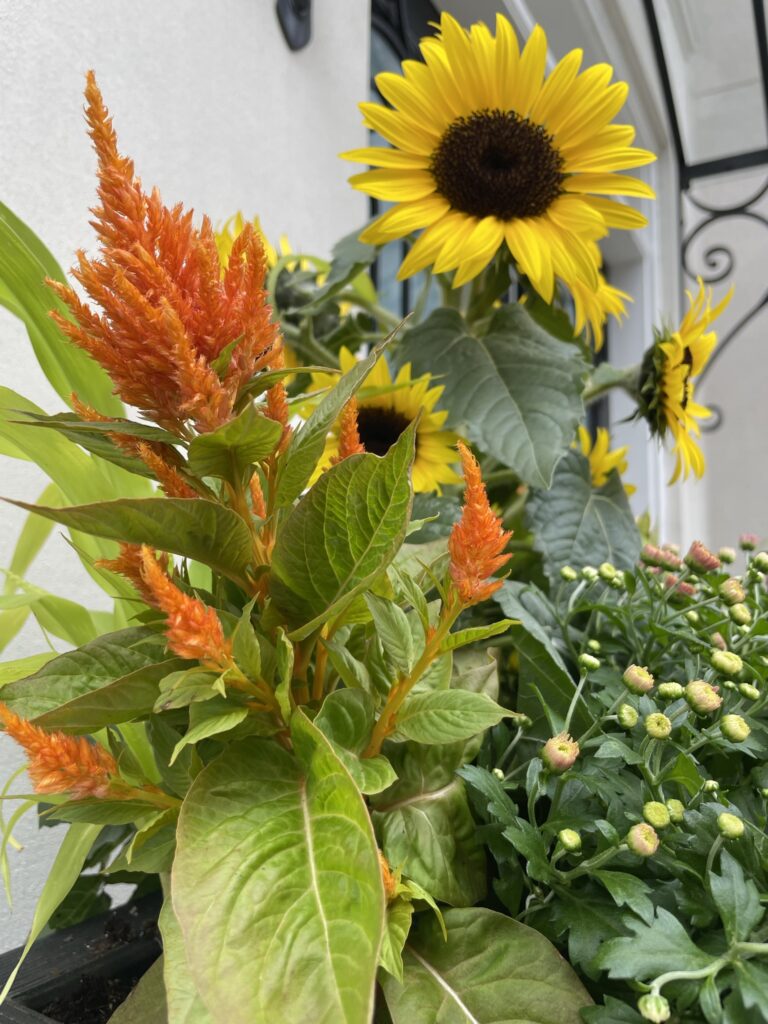
Golden Hour
Butter yellow, amber, and warm cedar. Best on grey and white exteriors where it brings warmth the stone does not have.
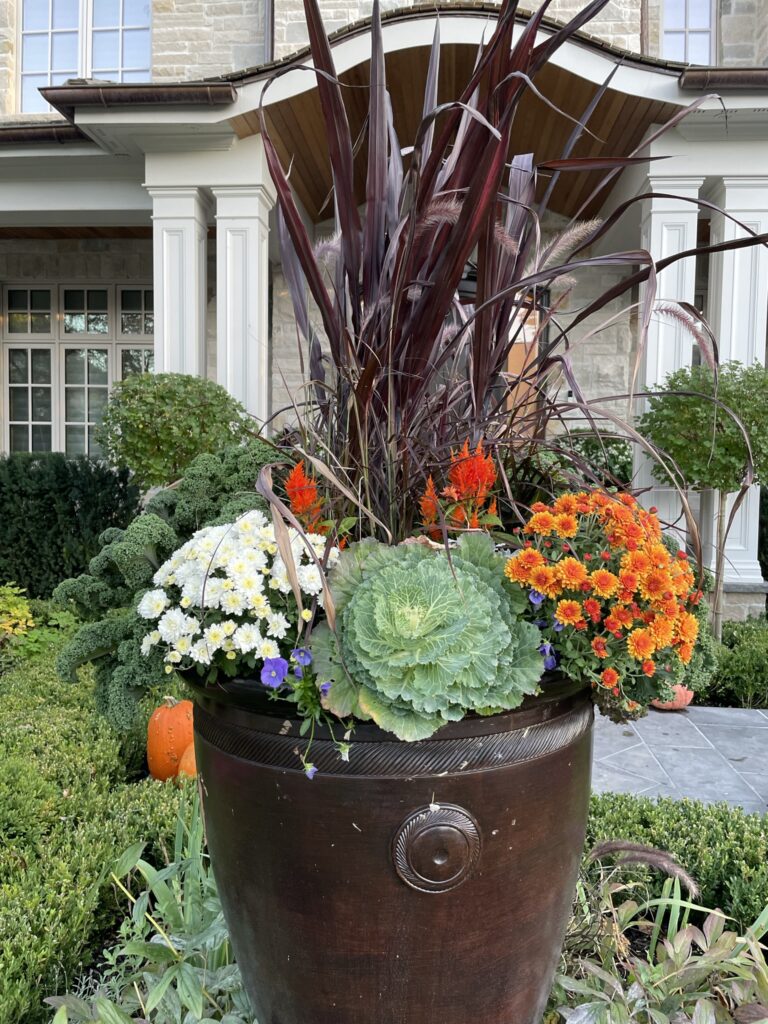
Moody Harvest
Deep burgundy mums, purple kale, and silver dusty miller. The most designed looking of the four and the one that needs a light accent so it does not go flat after four in the afternoon.
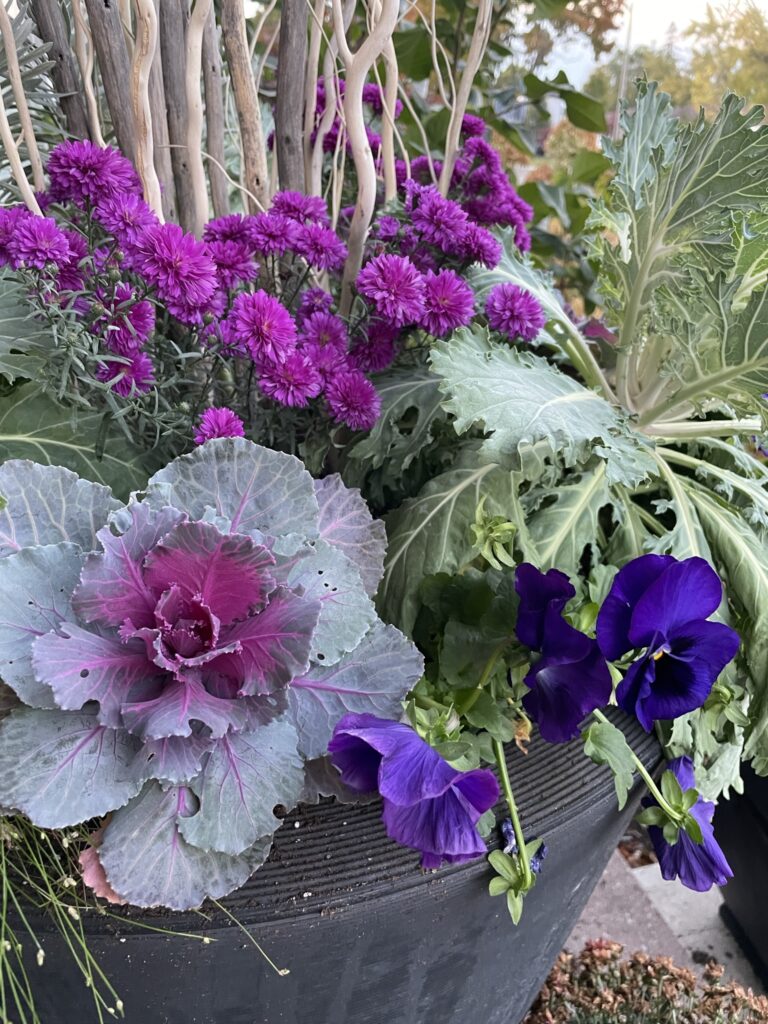
Pink Pumpkin
The one people are surprised by. Dusty pink, cream, and sage. Excellent on red brick, which fights orange and does not fight this.
Full plant lists and labelled diagrams for all four are in Fall in the Planter Garden 2026. If you want more palette thinking first, Five Fall Planter Colour Palettes That Feel Collected covers the reasoning.
Five plants that actually hold through October
Fall planters fail for one of two reasons. Either the plants cannot take the cold, or they can but they were placed badly.
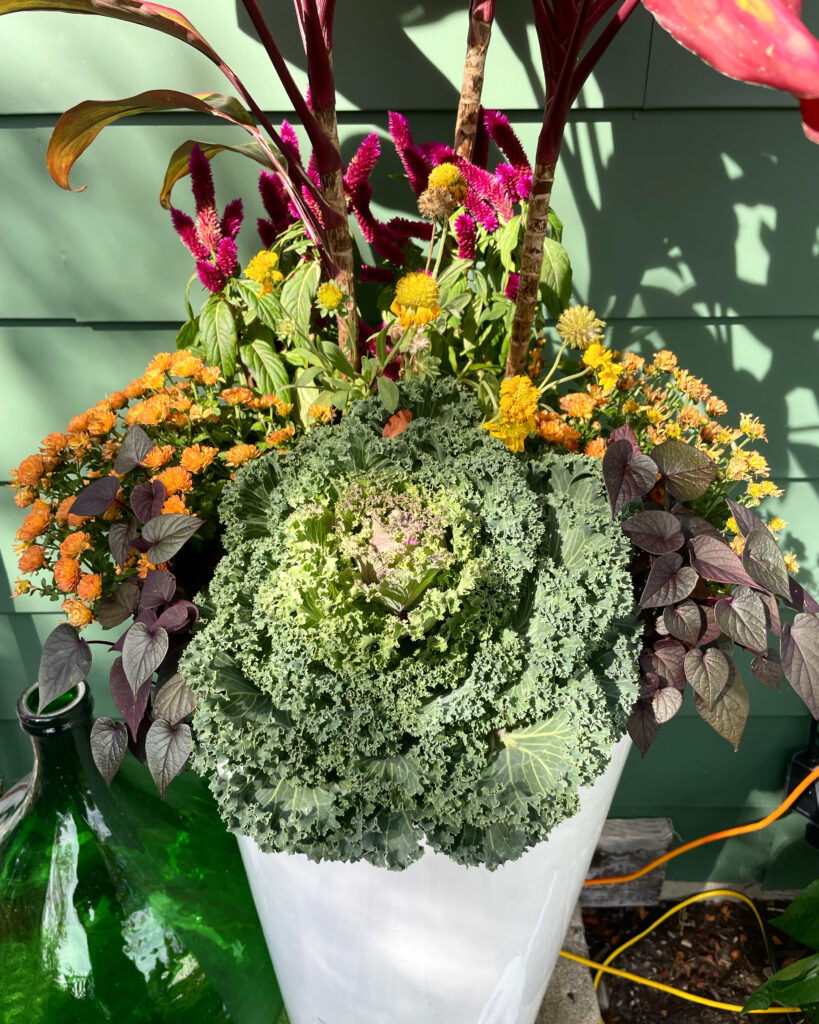
- Hardy mums. The obvious one, and the one most often bought wrong. Buy them in tight bud, not in full bloom, or you have already spent half their life on the drive home.
- Ornamental cabbage and kale. The workhorse. It gets better as the temperature drops, the colour deepens after frost, and it holds structure long after the mums are finished.
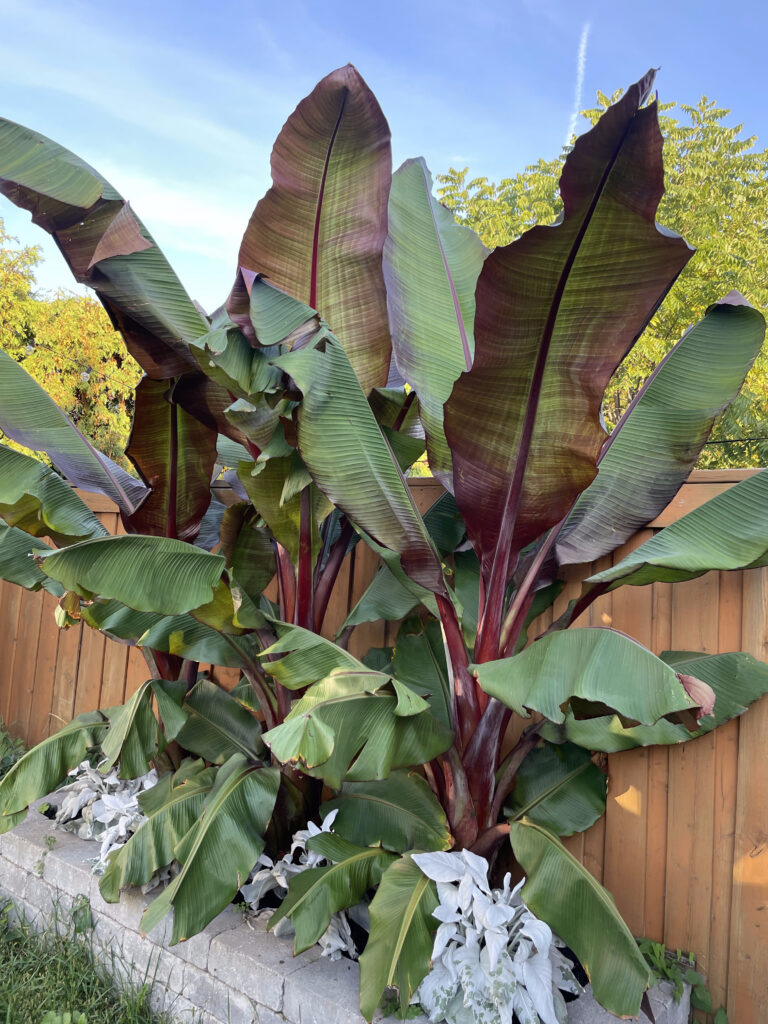
- Ornamental grasses. Height and movement. They catch low autumn light in a way nothing else in the pot does.
- Rudbeckia. Warmth without the flatness of orange, and it keeps going well past the point where most annuals give up.
- Celosia. Texture and saturated colour. Use it as a supporting player rather than the centre of attention.
If you want something instead of mums entirely, kale and grasses alone will carry a planter beautifully, and they will still look good in November when everything else has gone.
Accents that do not look cheap
The accent layer is where fall planters most often go wrong, because it is where the plastic shows up.
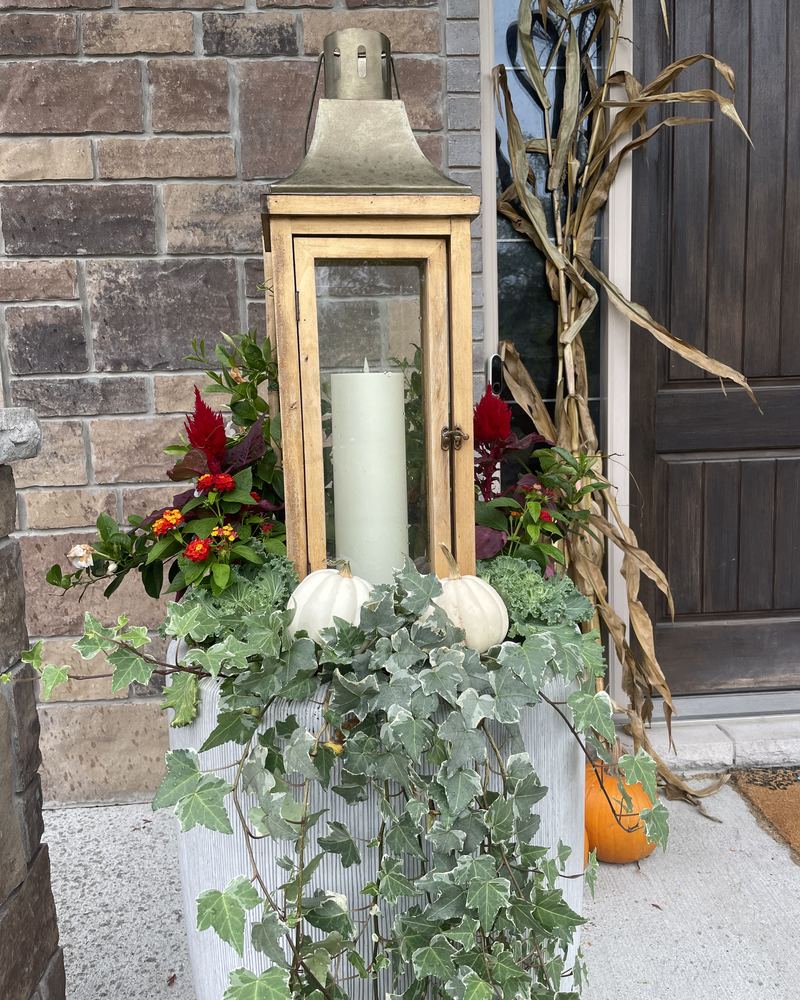
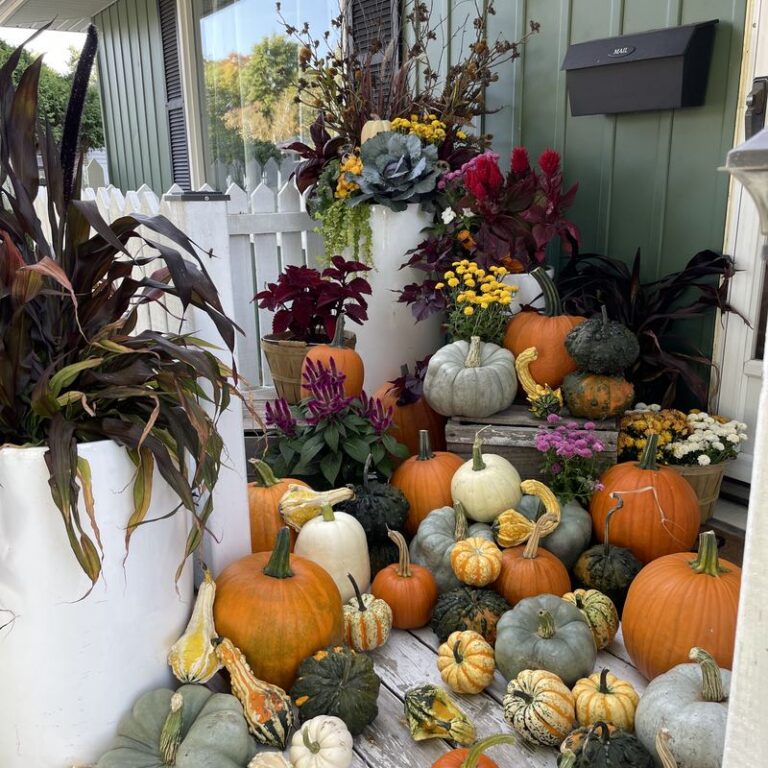
What works: birch poles, dried lotus pods, wood picks, sculptural bare stems, and matte pumpkins. What does not: anything glossy, anything that looks moulded, and anything scaled wrong for the pot.
The pumpkin problem deserves a mention on its own. Loose pumpkins roll out, sink into the soil, or simply disappear into the planting. They need to be lifted and anchored, not set on top. There is a straightforward fix for this involving a skewer, and it is covered properly in the magazine.
For more on which faux elements pass and which give themselves away, see Fall Planter Ideas With Pumpkins, Cedar, and Pine.
Build it so it becomes the winter planter
The best fall planters are not torn out in November. They are converted.
If the structural layer is cedar, birch, or an upright branch, it stays. The kale often survives into December. What comes out is the mums and the pumpkins, and what goes in is magnolia, red berries, and more evergreen. You are not starting over, you are swapping the seasonal layer.
The winter build has its own timing and its own set of problems, chiefly the ground freezing before your stems are in it. That is covered in Christmas Planter Ideas 2026.
Planning for that from the start is the difference between one planter a season and one planter a year. One Planter, Four Seasons walks through the same spot across the whole calendar.
Common questions
When should I plant fall planters in Ontario?
The first two weeks of September. Early enough that the plants establish before the cold, late enough that you are not burning the display through the last of the summer heat.
How long do fall planters last?
Six to eight weeks at peak with the right plants, and longer if kale and grasses are doing the structural work. Mums are the shortest lived element in the pot.
Do fall planters need watering?
Yes, and this is where most of them die. Autumn rain rarely reaches under a covered porch. Check the soil weekly until the ground freezes.
What can I use instead of mums?
Ornamental cabbage and kale, asters, heuchera, or ornamental grasses. All four last longer and none of them peak and collapse the way mums do.
Where to go from here
If you want the full palettes, the exact plant lists, the labelled diagrams and the printable planner, that is Fall in the Planter Garden 2026. Thirty eight pages, and every photograph in it is a planter I actually built.
Two companions to this guide: choosing the right urn planter, which covers sizing and the materials that survive a Canadian freeze, and how to keep pumpkins from rotting, so the display still looks good in the last week of October. When the fall planting is finished, the Christmas planter guide picks up where it leaves off.
If you would rather have it designed for your specific house, light and style, the Custom Porch Planter Design covers all four seasons, winter included.