How to Keep Pumpkins From Rotting on Your Porch
A pumpkin on a porch in Ontario should last from late September to the end of October without going soft. Most do not, and it is almost never bad luck. It is the pumpkin that was chosen, and where it was put.
Here is what actually keeps them firm, in the order that matters.
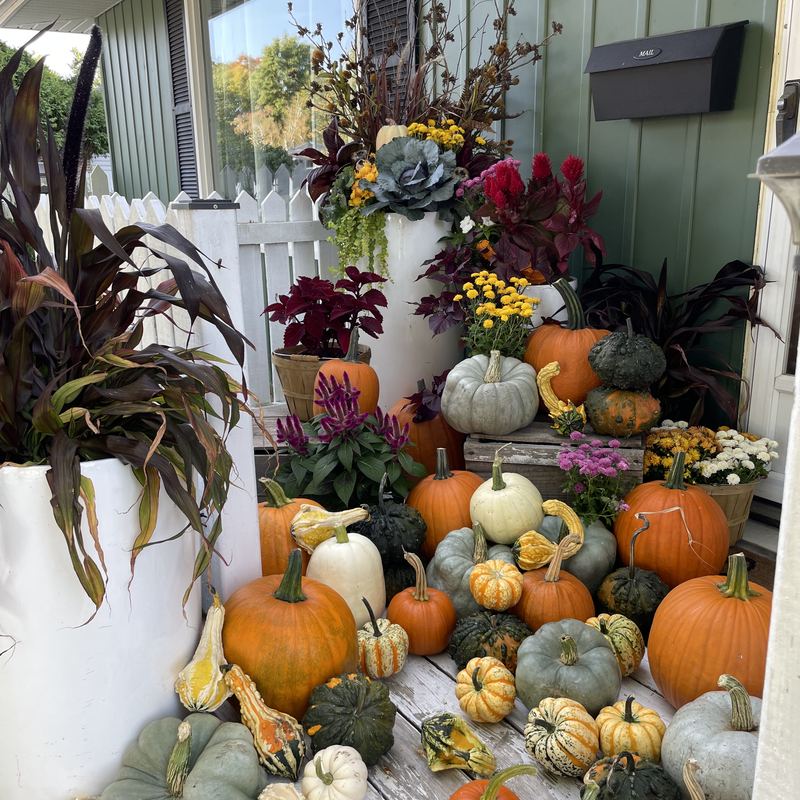
What is actually happening when a pumpkin rots
A pumpkin is mostly water inside a rind. As long as that rind is unbroken, it is a sealed container and bacteria and fungi cannot get in. Every scratch, bruise, stab wound from a display hook, and every carved face is a door.
Two other things speed it up. Warmth, which lets microbes multiply faster. And moisture sitting against the skin, which is what happens when a pumpkin sits flat on wet stone or damp mulch.
So the whole job is keeping the rind intact, keeping the pumpkin dry, and keeping it cool.
Most of the result is decided at the patch
The single biggest factor is which pumpkin you pick up, and it takes ten seconds to check.
- Press a fingernail into the rind. If it dents, the pumpkin is not fully mature and it will not last. A ripe rind is hard.
- Look at the stem. It should be firm, dry and still attached. A pumpkin carried home by the stem, or with the stem snapped off, has an open wound at the top where rot starts first.
- Turn it over. The underside is where soft spots hide, and it is the part nobody checks in the display bin.
- Feel the weight. Heavy for its size means dense flesh and plenty of water still in it.
- Skip anything with a cut, a bruise or a mould spot, however small. It will not heal.
A well chosen uncarved pumpkin, kept dry, will hold for two months. A soft one will not make it three weeks whatever you do to it afterwards.
Wash them before they go out
The surface of a pumpkin straight from a field carries mould spores and bacteria. Wiping them off buys real time.
Mix roughly a tablespoon of household bleach into a gallon of water, about 15 ml in 4 litres. Wipe the whole pumpkin, including the underside and around the stem, then dry it completely with a cloth. Damp is the enemy, so do not skip the drying.
Do this once, before the pumpkins go on the porch. It is the difference between rot starting in week two and rot starting in week six.
One caution. If squirrels, deer or pets are likely to chew on your display, rinse the bleach off with clean water and dry again. It is a surface treatment, not something you want an animal eating.
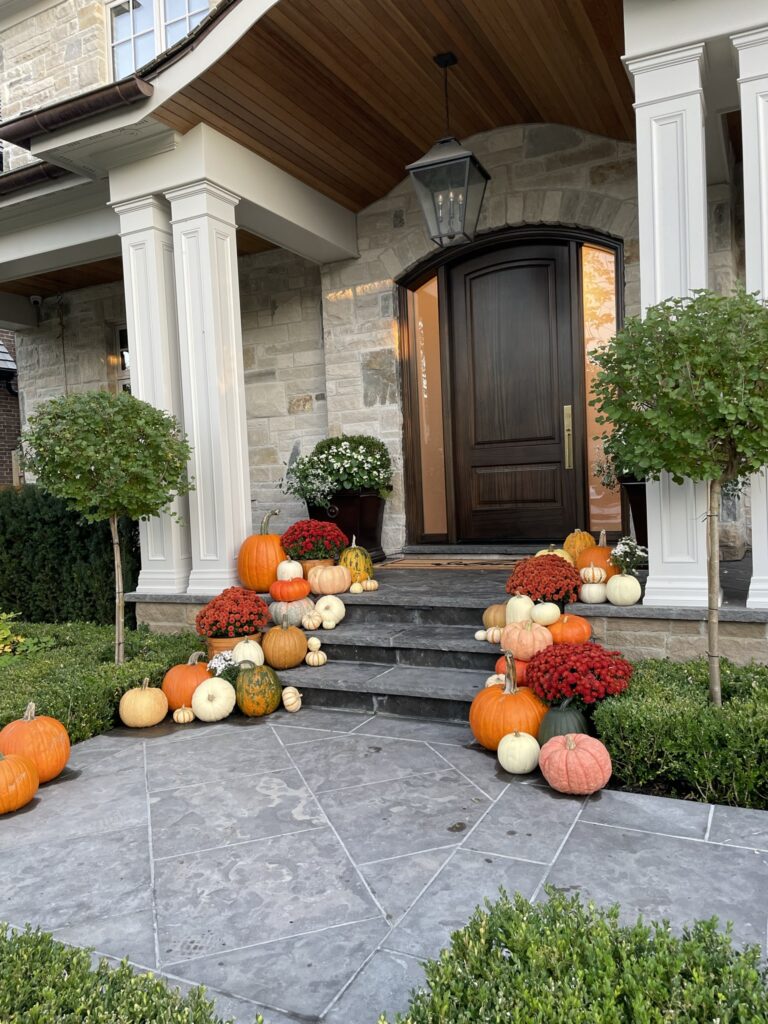
Where you put them matters more than what you spray on them
This is the part people skip, and it is worth more than any of the internet tricks.
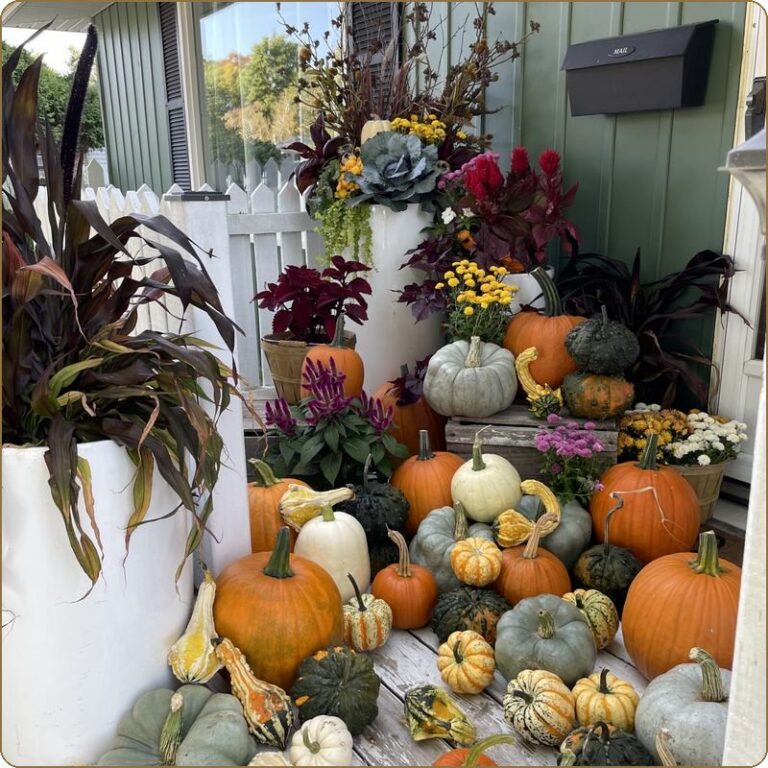
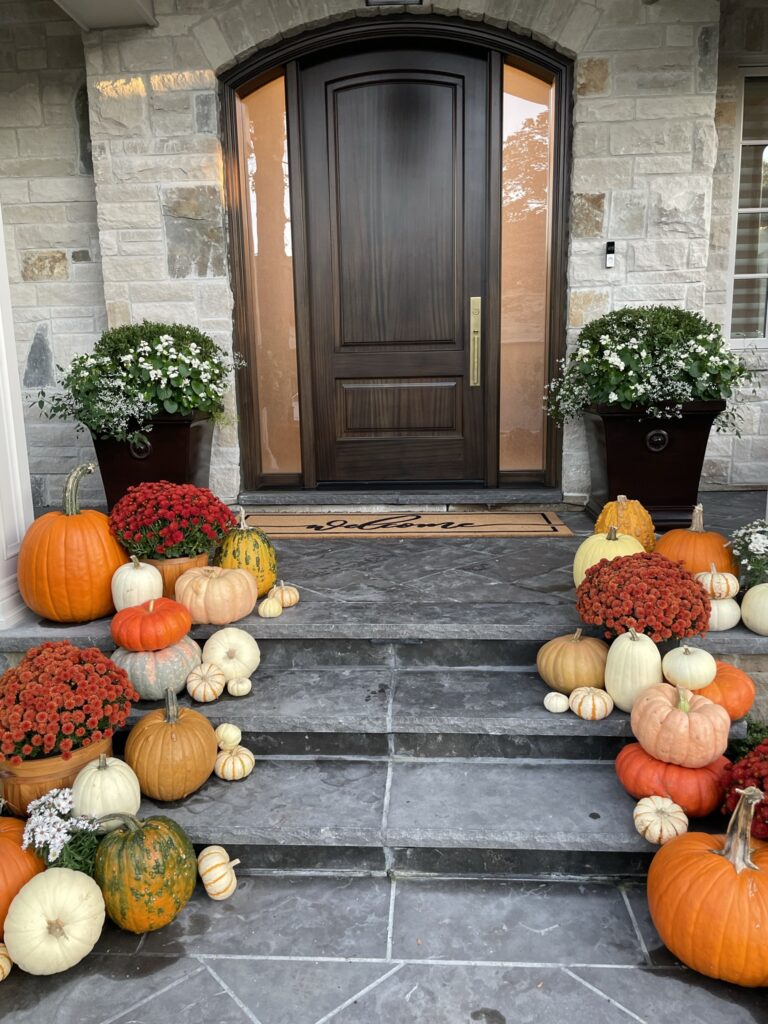
- Get them off wet ground. Stone, concrete and mulch all hold water against the rind. A step, a riser, a crate, a board, anything that lets the underside breathe.
- Leave air between them. Pumpkins stacked shoulder to shoulder trap moisture where they touch, and that is where the first soft patch appears.
- Prefer shade. A south facing step in full afternoon sun cooks them. Cool and shaded lasts far longer.
- Watch the first hard frost. Freezing then thawing ruptures the cells and a pumpkin turns to mush within a day or two. If a sharp overnight frost is coming in early October, cover them or bring them in for the night.
- Rotate them. Turning each one every week or so keeps any single spot from staying damp, and lets you catch a soft patch before it spreads to its neighbours.
Carved pumpkins are a different problem
Once you carve, you have opened the container and the clock changes from weeks to days. Expect three to seven days outdoors, less in warm weather.
What genuinely helps: scrape the inside walls clean rather than leaving stringy pulp, coat every cut edge with petroleum jelly to slow moisture loss, and bring the pumpkin inside overnight if the days are warm. What does not help much: soaking a carved pumpkin in water, which softens it faster than it hydrates it.
The practical answer, if the display needs to look good for the whole month, is to keep the carved pumpkins to a small group you can replace, and let uncarved ones do the volume.
When one starts to go
Take it out immediately. A rotting pumpkin leaks, and the liquid carries the mould onto whatever it is touching. One soft pumpkin left in place for a weekend will take two or three others with it.
Wipe down the surface underneath before you put anything back in its place.
Common questions
How long do pumpkins last on a porch?
Uncarved and well chosen, six to eight weeks in cool weather. Carved, three to seven days. A pumpkin that was already soft when you bought it, two to three weeks at best.
Does the bleach trick actually work?
Yes, for uncarved pumpkins, because it removes the surface mould and bacteria that start the process. It does far less for a carved pumpkin, where the exposed flesh is the problem rather than the skin.
Should I put pumpkins in the sun or the shade?
Shade. Heat is what lets rot accelerate, and direct sun also fades the colour.
Can I use hairspray or wax to seal a pumpkin?
They slow moisture loss on a carved pumpkin a little, but they also seal moisture and microbes in against the flesh. Petroleum jelly on the cut edges does the same job with less mess, and none of them should go on a pumpkin that might later be eaten or composted near animals.
Why did my pumpkin collapse overnight?
Almost always frost. Once the flesh has frozen and thawed there is nothing to be done, so watch the forecast in the first half of October.
Where to go from here
Pumpkins are the easy part of a fall entrance. The planters are what make it look designed rather than decorated, and the complete fall planter guide covers the timing, the four colour palettes and the plants that hold through October.
If you are choosing containers, the urn planter guide covers sizing and which materials survive a Canadian winter.