The Simple Formula for a Full Fall Planter
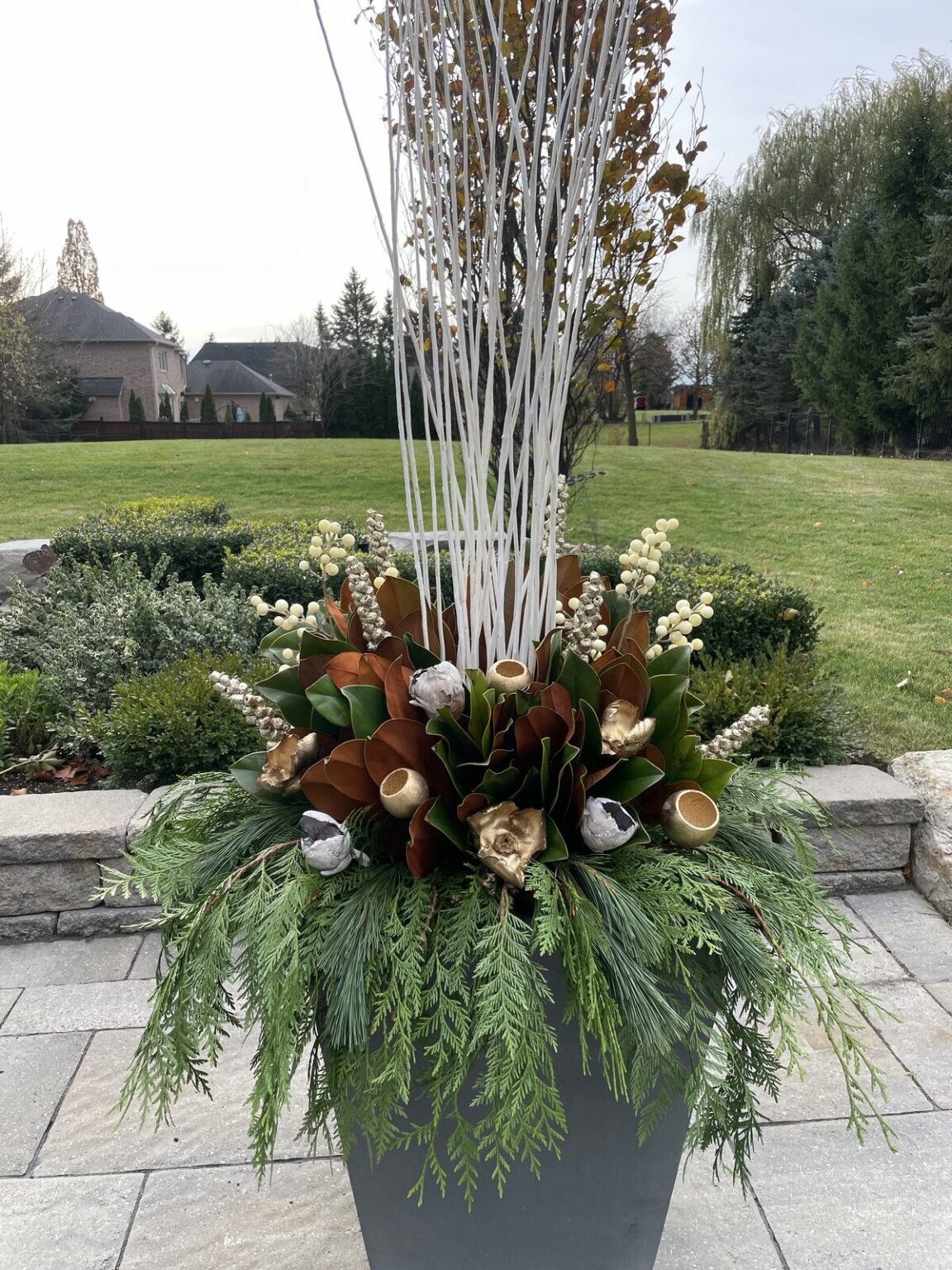
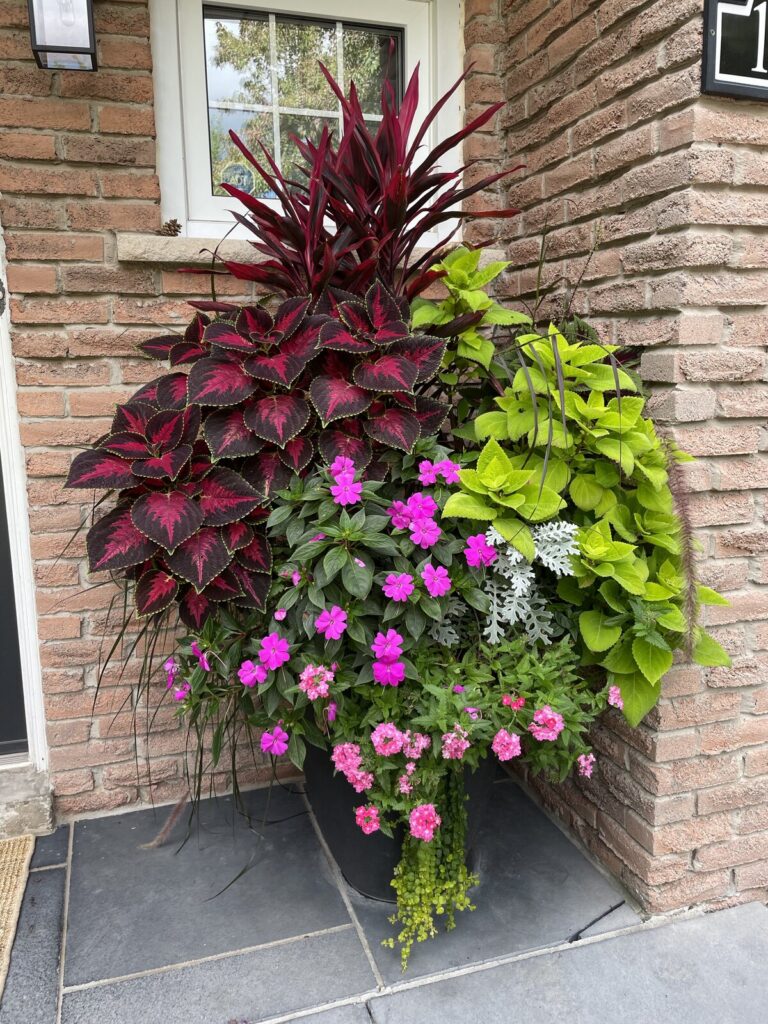
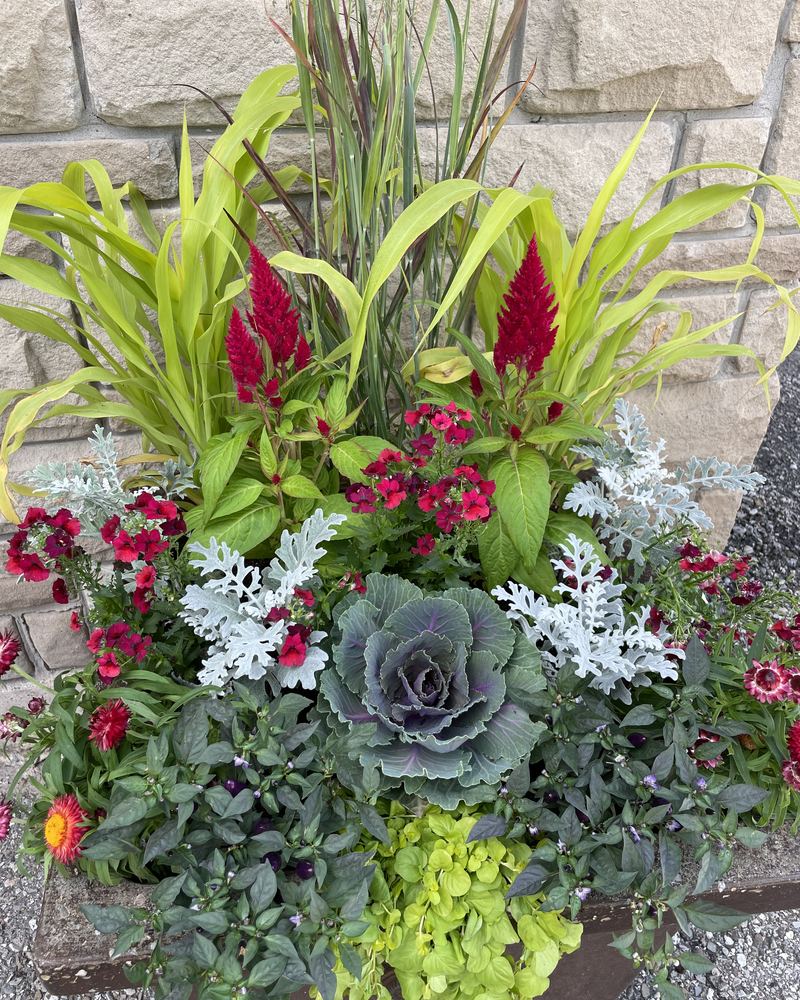
A full fall planter is less about the number of plants and more about giving every layer a job. I use the same four-part formula whether I am filling a compact porch pot or a large urn: height, filler, one clear focal point and a trailing edge. Once those four pieces are balanced, the planter reads as intentional from the street and still looks good up close.
This is a useful formula for September because the plants are already mature, garden centres are full of mums and ornamental cabbage, and pumpkins can be added later without rebuilding the container.
1. Start with height
The tallest element establishes the planter’s scale. For a living fall container, I like ornamental grass because it adds movement without looking heavy. Dogwood, curly willow or a few well-placed branches create the same vertical line when you want a more architectural look.
Do not choose the centrepiece in isolation. Look at the front door, steps and wall behind the planter. A tall entrance can carry more height; a low porch or planter under a window needs a quieter silhouette. As a starting point, let the finished arrangement reach roughly one-and-a-half to two times the height of the container, then step back and adjust.
2. Build the middle with two kinds of filler
The middle is what makes a planter feel generous. Use one broad, substantial plant and one finer texture instead of filling the pot with several equal-sized mounds. A mum or ornamental cabbage gives you weight. Coleus, dusty miller, heuchera or branching foliage connects that weight to the taller centre.
Repeat colours instead of repeating plants. If the centre has burgundy leaves, echo that colour in a cabbage, a mum or a small decorative accent. The repetition makes a mixed planter feel designed rather than collected.

3. Add one focal point
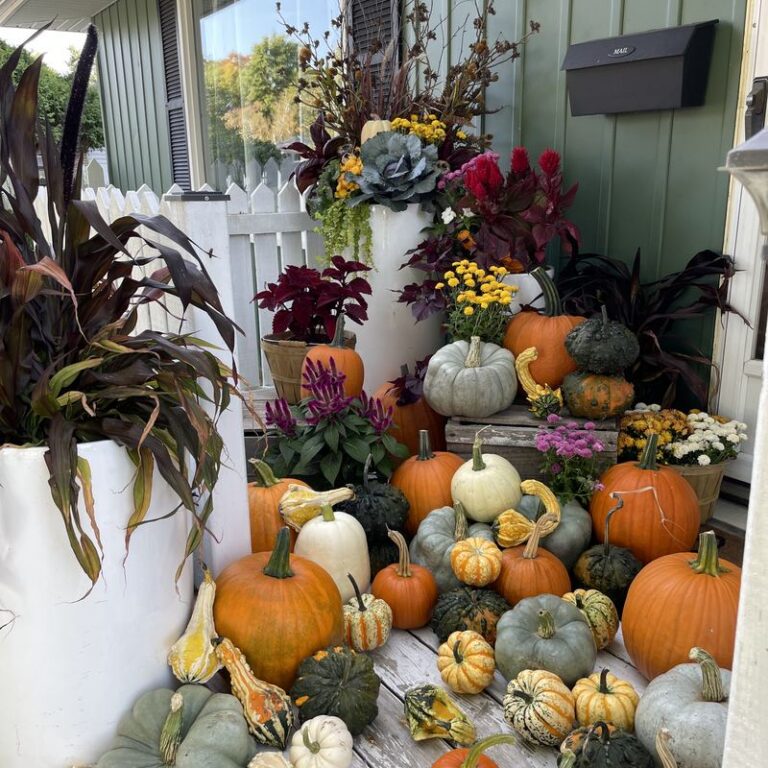
A focal point is the detail your eye lands on first. In early fall, that may be a cabbage with a strong rosette, a lantern tucked slightly off-centre or a cluster of dried seed heads. Once the weather cools, add a pumpkin at the base rather than scattering small ornaments throughout the planter.
One strong moment is usually more elegant than many small ones. If you use three pumpkins, treat them as one group and vary their size. Keep the largest low and slightly off-centre so it does not compete with the height of the arrangement.
4. Finish the rim
The last layer should connect the plants to the container. Ivy, creeping Jenny, wire vine and trailing evergreen all work. Place the longest piece toward the front or one side, then use shorter pieces around the remaining edge. A perfectly even skirt can look stiff; a little asymmetry feels natural.
This is also where you hide mechanics. Turn nursery-pot rims inward, fill small gaps with moss and remove leaves that sit against wet soil. The planter looks cleaner and the foliage is less likely to rot.
Watch the full fall planter tutorial
In this step-by-step build, I explain why each plant goes where it does and how the purple-and-yellow palette stays balanced.
A practical shopping list
- One tall grass, branch bundle or upright foliage plant
- One substantial filler such as a mum or ornamental cabbage
- One contrasting foliage or fine-textured filler
- Two or three trailing plants or cut stems
- One optional focal accent such as a pumpkin or lantern
- Fresh potting mix if the existing soil is compacted
Buy the structure first. It is easier to choose a coherent palette around one good grass, cabbage or mum than to make a cart of unrelated plants work together. If you want ready-made combinations, the Fall Planters 2026 guide includes four complete palettes, plant lists and timing notes.
Affiliate disclosure: This article may contain affiliate links. If you shop through them, The Wreath Coach may earn a commission at no extra cost to you.
For the finishing pieces I use most, browse my Amazon Canada storefront or LTK storefront. Choose pieces that support the palette you already built rather than adding a new colour at the end.
Three mistakes that make a planter feel smaller
- Everything is the same height. Create a clear rise from the rim to the centre.
- Every plant has the same texture. Pair broad leaves with fine grass, branching foliage or trailing stems.
- The accents are spread evenly. Group decorative pieces so the eye has somewhere to rest.
If your planter is beside a double door or a large entrance, read how to choose the right urn and scale for your front door before buying more plants. The container’s proportion matters as much as what goes inside it.
Get the free Four-Season Planter Card. It arrives by email with the timing reminders I use for each seasonal changeover.
Frequently asked questions
How many plants do I need for a fall planter?
For a medium container, five to seven well-chosen plants are often enough: one taller element, two or three fillers and two or three trailing plants. Larger urns need either larger nursery pots or repeated groups, not necessarily more varieties.
When should I add pumpkins?
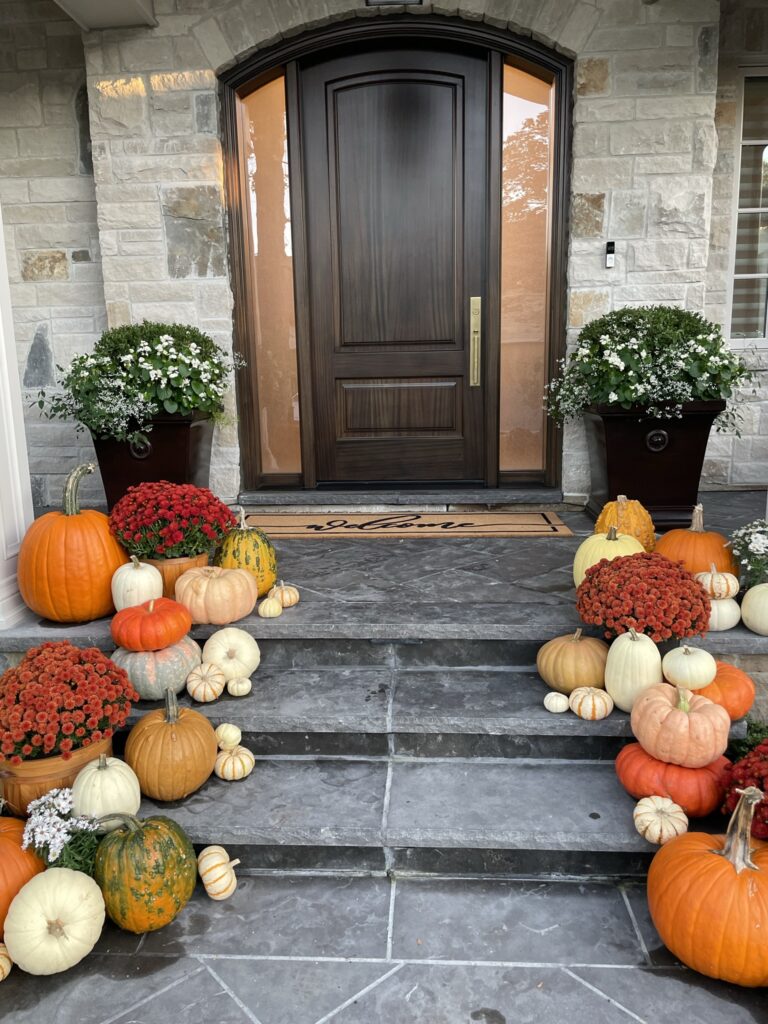
Build the living planter first, then add pumpkins when nights cool and the porch is out of strong afternoon sun. Keeping pumpkins off damp soil and intact around the stem helps them last longer. See the full guide to keeping pumpkins from rotting.
Can this planter transition into winter?
Yes. Keep the strongest branches and neutral foliage, remove tender plants after frost, then add fresh evergreen, birch, pinecones or berries. The detailed fall planter guide will take you through October; the seasonal swap is the next step.