Front Porch Planter Ideas for Every Style of House
A front porch planter is the only piece of design in your house that every single visitor sees, and most of them see it from about twenty feet away. That distance is the whole problem. What looks generous on the potting bench looks apologetic on the step.
This is a walk through what actually works, sorted by the thing that decides it: the house behind the planter.
First, the rule that applies to every porch
Buy the container one size larger than feels right. Almost every porch planter is too small, and it is the single most common mistake. A container that looks slightly too big in the shop looks correct on the step.
The working guide: the planter should be at least one third the height of the door beside it. For a standard eighty-inch door, that means a container around twenty-six inches tall before anything is planted in it.
Symmetry, and when to break it
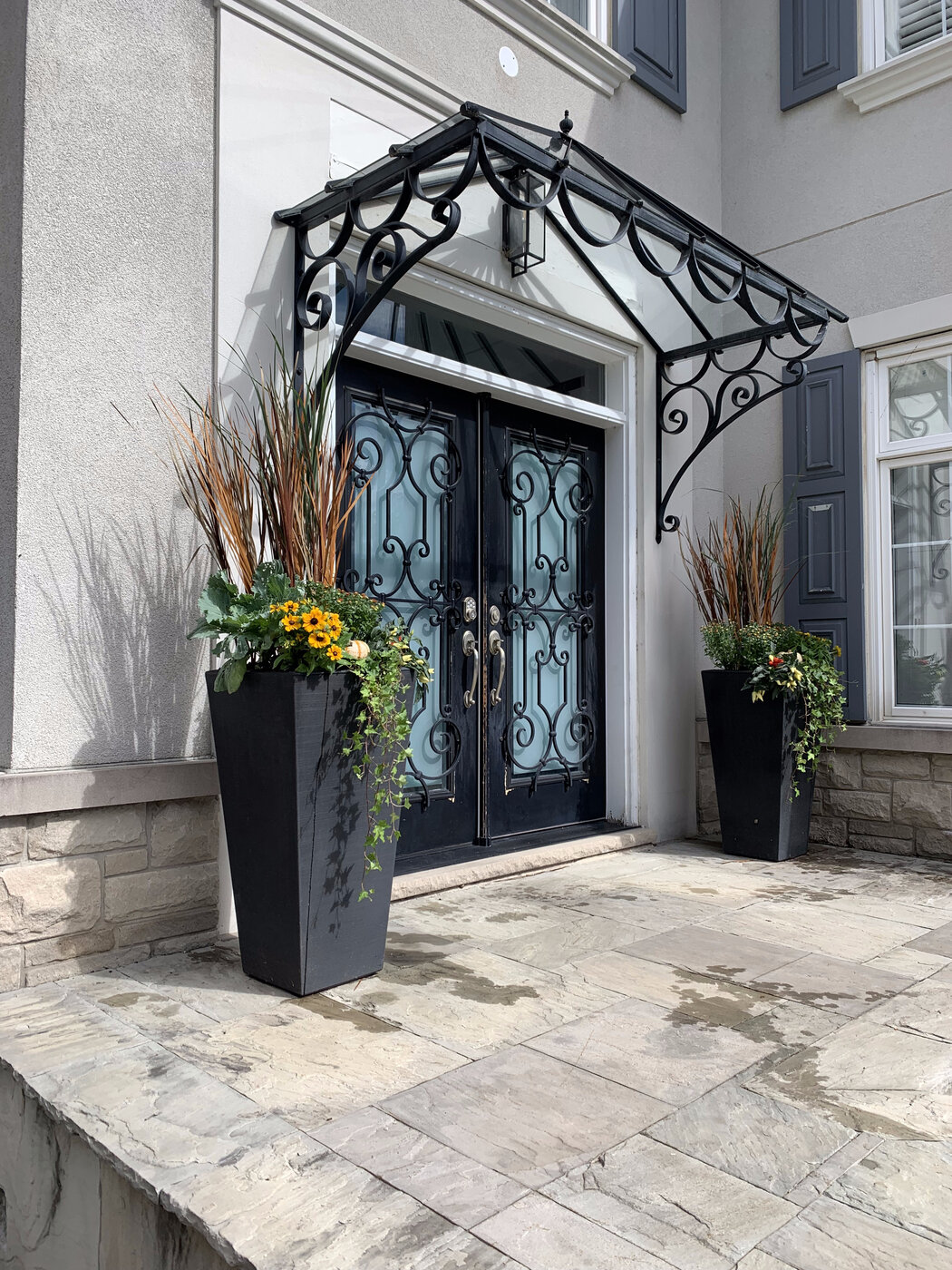
If your entrance has two sides, use two planters and make them match. Symmetry at a front door reads as considered. It is the cheapest way to make an ordinary entrance look designed.
If the door sits off-centre, or there is only room on one side, do not force a pair. Use one larger container and let it be deliberate. A single generous planter beats two squeezed ones.
Matching the planter to the house
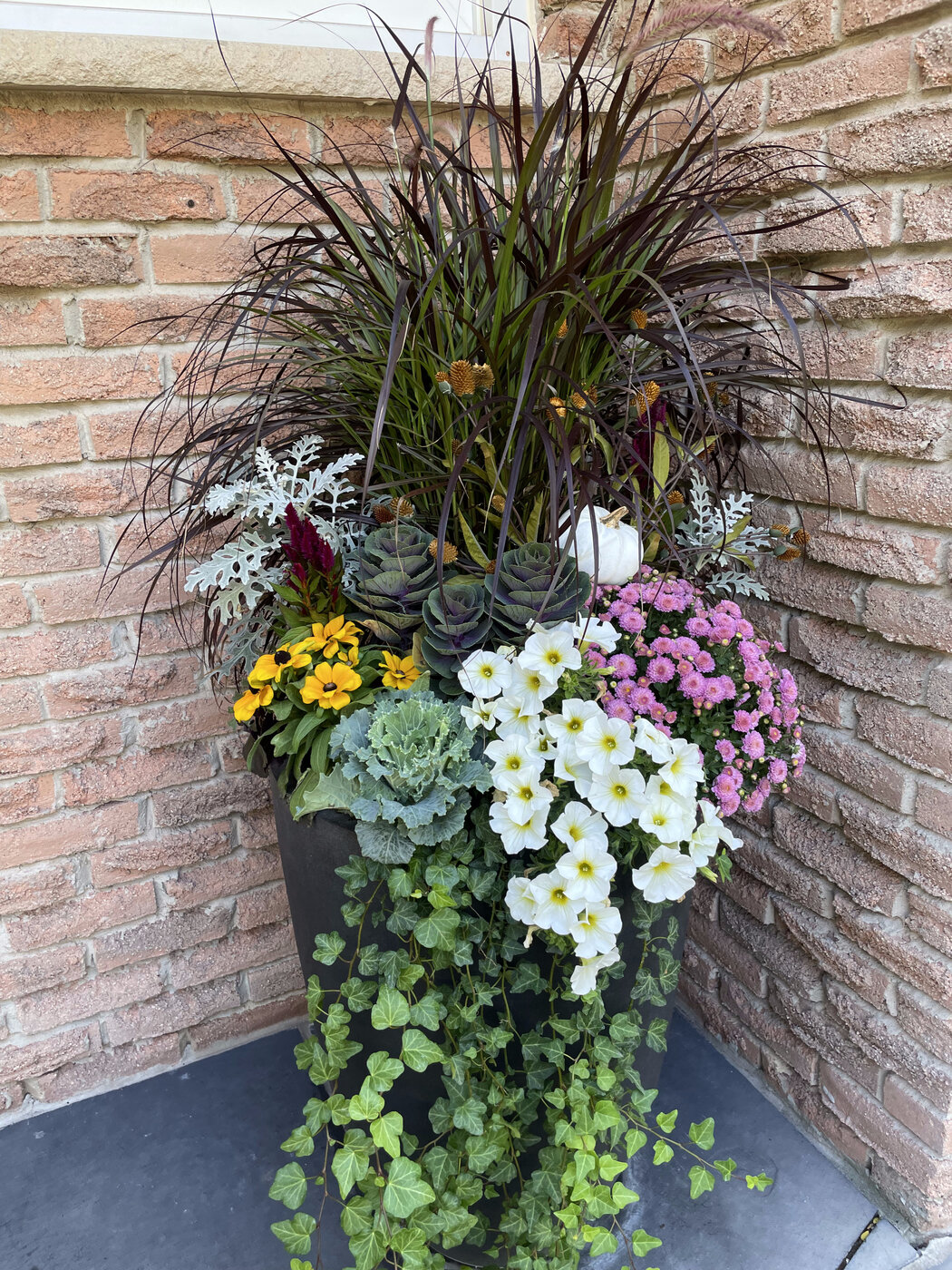
Red or orange brick
Warm brick fights warm colours. Orange mums against red brick is the classic mistake. Go cool: white, cream, deep burgundy, silver foliage. A charcoal or black container gives the eye somewhere to rest.
Buff, sand or limestone
The most forgiving background there is. Almost any palette works. Use a container with some texture, because a flat colour disappears against pale stone.
White or painted clapboard
High contrast is the point. Black containers, dark foliage, strong colour. Anything pale vanishes.
Dark siding or a dark door
Go the other way. Cream containers, light foliage, white flowers. A black planter against a black door is a hole in the photograph.
There is more on this in choosing a planter palette that actually works.
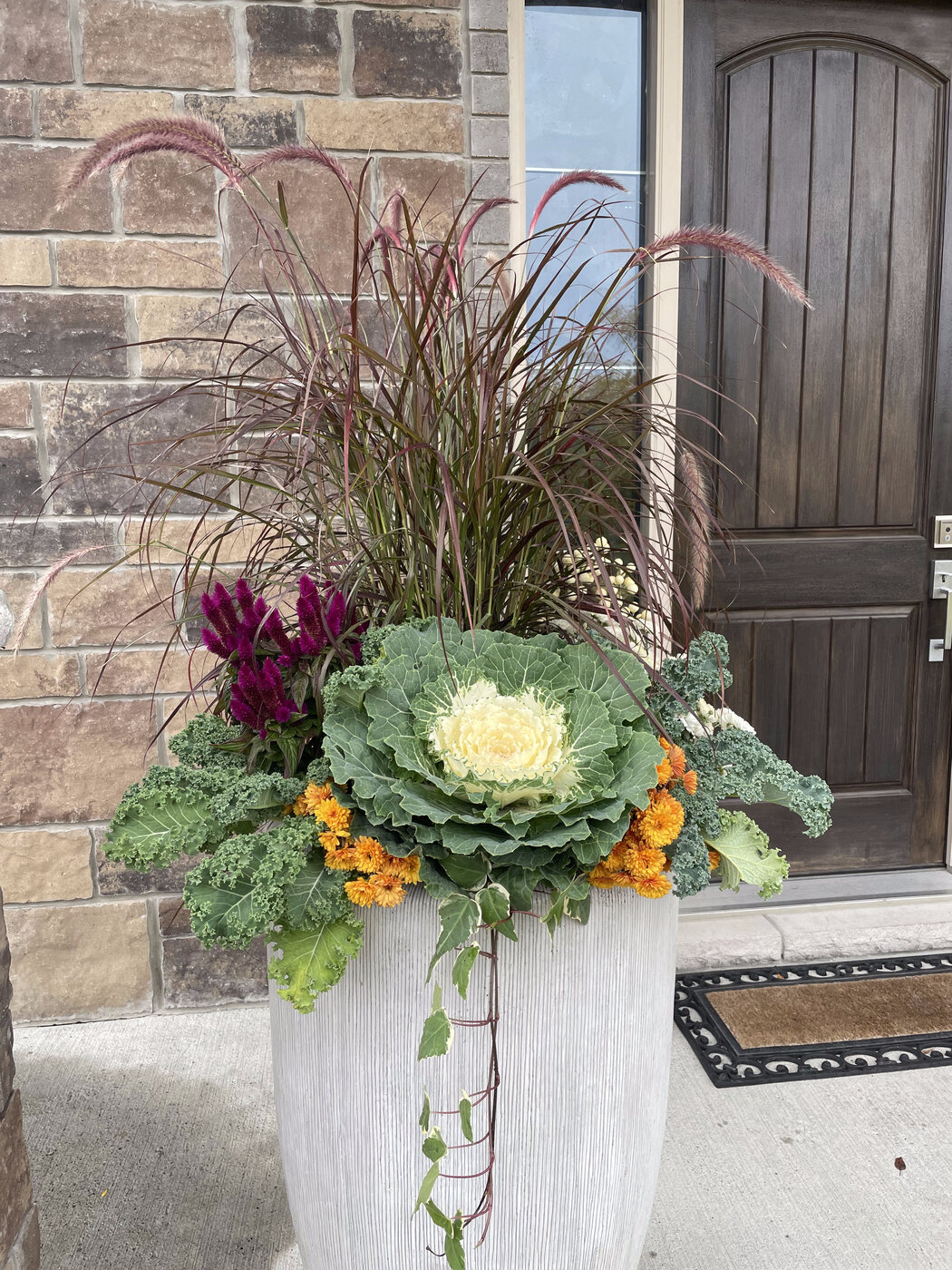
The shape of the container matters more than the colour
- Tall and tapered suits a narrow entrance and a tall door. It adds height without taking floor space.
- Wide and low suits a broad step or a porch with a low roofline, where a tall container would crowd.
- Urn shaped suits traditional and stone houses, and reads formal. There is a full guide to choosing an urn planter.
- Rectangular troughs suit a run along a railing or a wall, not a doorway.
Tight entrances
If there is not room for a floor container, go up. Wall planters, a hanging basket at door height, or a narrow column planter will do the job. There is a separate piece on small porch planter ideas for tight entryways.
Some links below are affiliate links. If you buy through them I may earn a small commission, at no cost to you. I only link to things I use or would.
Containers I actually recommend
Veradek Pure Series Taper Planter, 30 inch
The one I point people at most often. Thirty inches is the height that finally looks right beside a standard door, and it is light enough that one person can move it planted.
Veradek Pure Series Midori Planter, wide
For a broad step or under a low porch roof, where a tall taper would feel cramped.
Large decorative lanterns, 22 and 19 inch, set of two
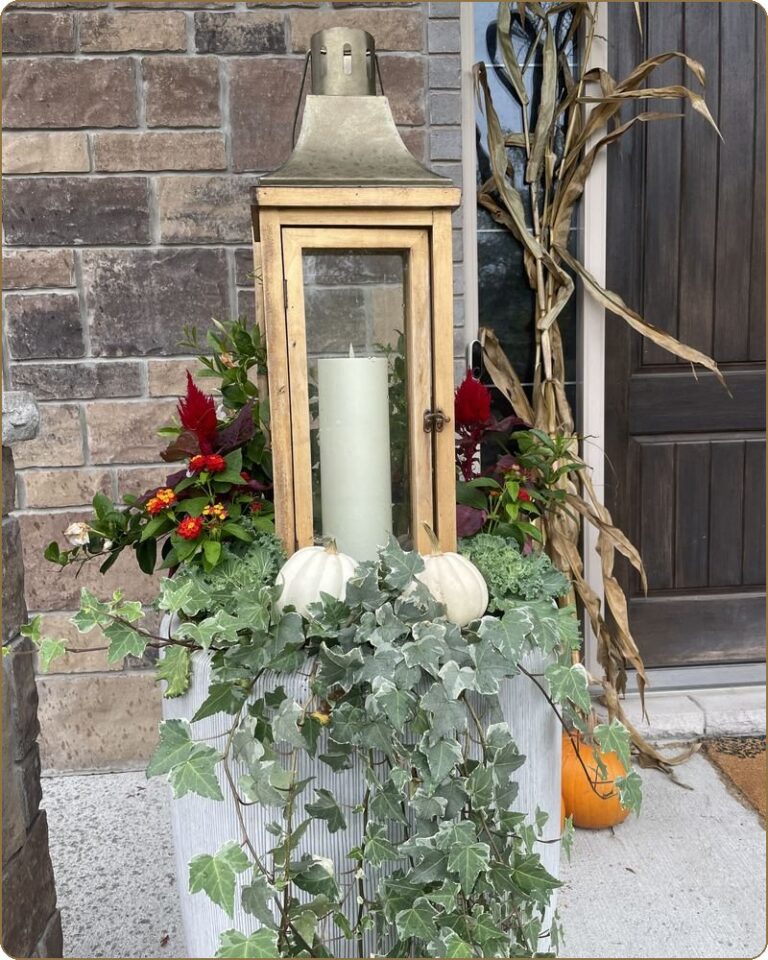
A lantern beside a planter fills the gap between the container and the door, and it carries straight through from autumn into winter. One of the best value pieces on a porch.
See the rectangular planters I use
Where to go next
For a season-by-season build in the same container, read one planter, four seasons. For autumn specifically, the complete fall planter guide has the palettes and plant lists.
Want this done for you? The Custom Porch Planter Design 4-Season Plan is one design drawn for your entrance that covers all four seasons, so you buy once and follow it for a year.