How to Make a Small Planter Feel Intentional
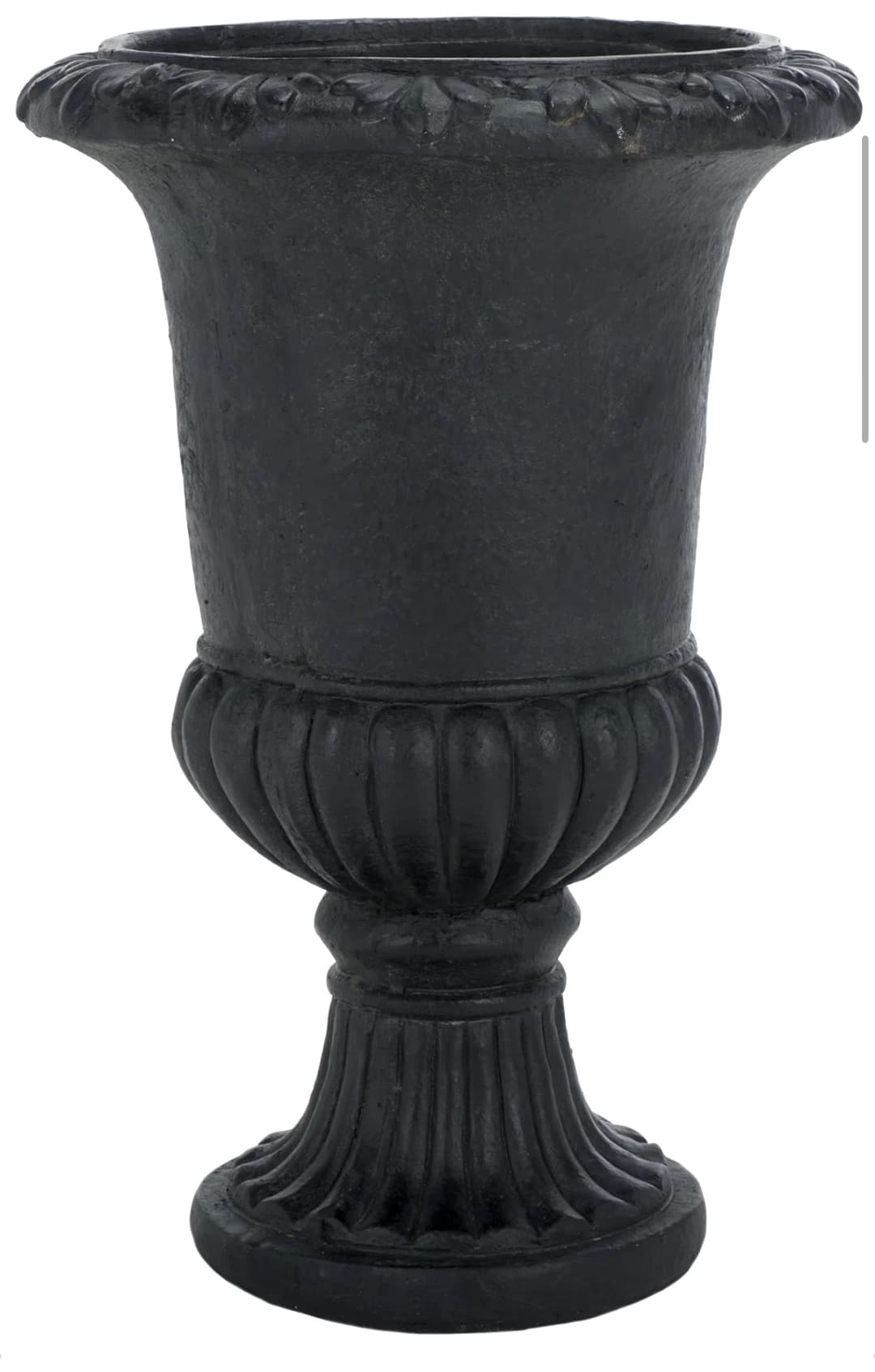
A small planter can look deliberate even when the entrance has very little room. The trick is to give it a clear outline and enough visual weight to belong beside the door. Adding more little plants rarely solves a container that feels lost.
Choose the spot before the plants
Stand where you normally approach the entrance. A planter should frame the door without narrowing the path or blocking the handle, house number or light. On a slim landing, try a rectangular container against the wall. A compact round planter can soften a hard corner, while a taller narrow shape makes better use of floor space than a wide bowl.
Look at the container from the sidewalk as well as from beside it. If the doorway is tall, a tiny pot on the ground will disappear. You can add height with a taller container or with the planting itself. Keep the footprint modest so people can still move comfortably past it.
Give the arrangement three jobs
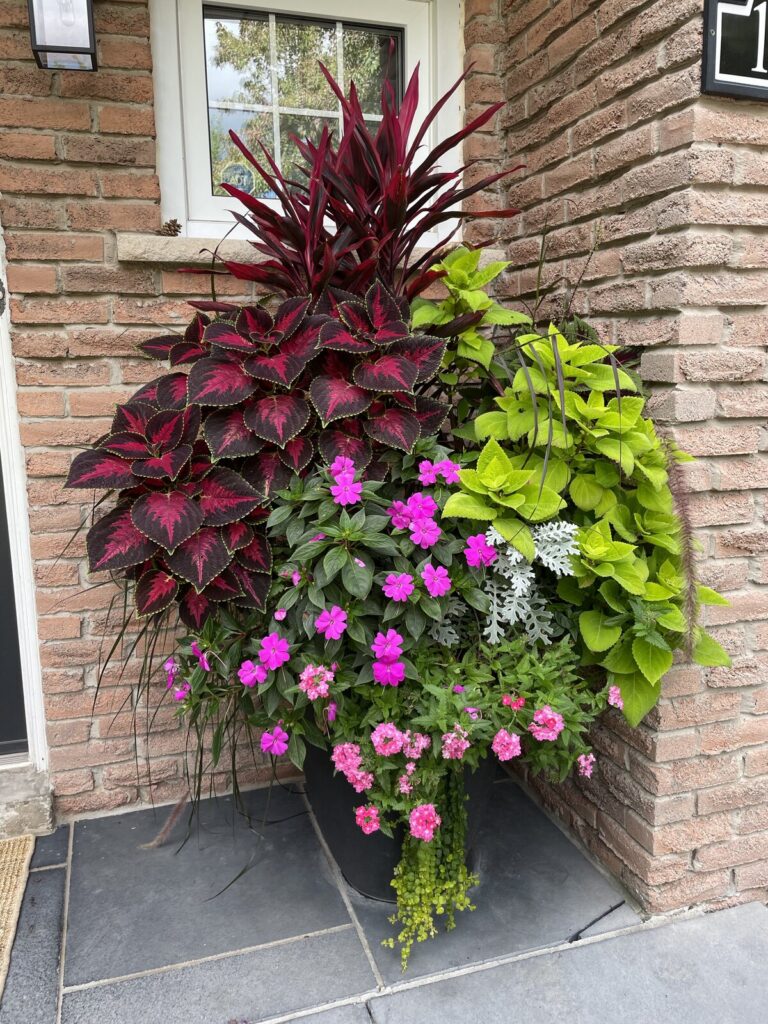
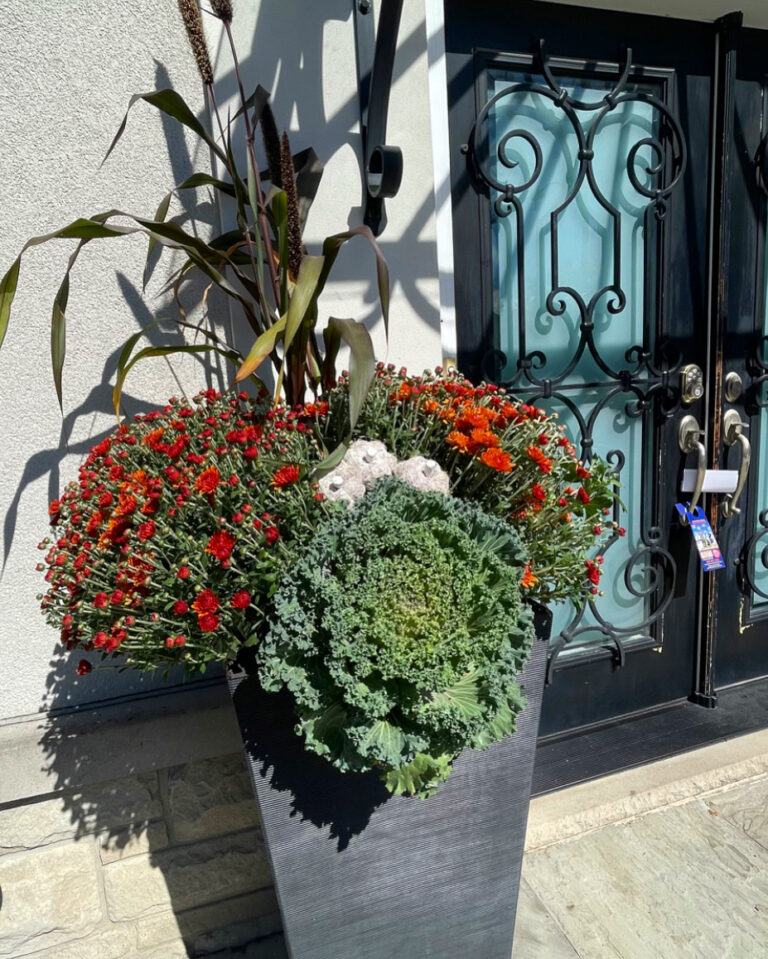
Use one upright element for height, one fuller layer to carry the colour and one softer edge to connect the planting to the rim. The upright element could be a compact evergreen, branches or a taller seasonal plant. A rounded foliage plant can fill the middle. Let one trailer or a few relaxed stems soften the front.
Those are roles, not a shopping list. In a very small pot, one well-shaped plant may do two jobs. Repeat one colour or texture rather than squeezing in a different plant for every gap. Leave enough space for living plants to grow and for you to water the soil, not just the leaves.
Make the container feel connected to the house
Echo a finish that is already at the entrance: the dark metal of a light fixture, a warm tone in the brick or the colour of the door hardware. You do not need a perfect match. Repeating a material once makes the planter feel like part of the entry rather than an extra object left on the step.
If there is room for only one planter, let it be the focal point. If you use two, keep their shapes and finishes related so the doorway still reads as one composition. Avoid lining up several undersized pots just to fill the space.
Check the practical details outdoors
Choose a container with drainage and keep the opening clear. Wind can tip a light, top-heavy pot, so set it on a stable surface and add weight at the base if needed. Check how much sun the spot gets before choosing live plants; a shaded entry and a hot, exposed step need different planting. Water according to the soil and weather rather than a fixed calendar.
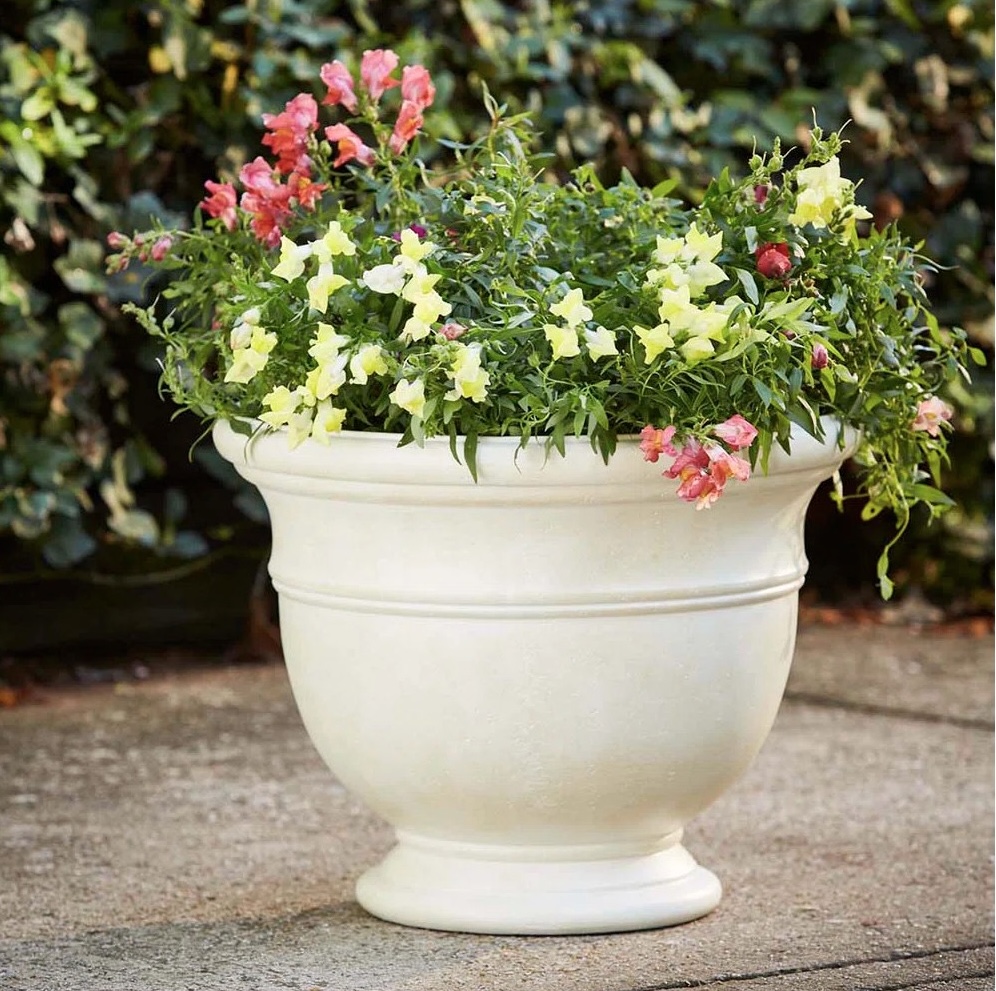
Step back once everything is in place. If the outline is clear from a distance and the walking path still feels easy, the planter is doing its job.
Affiliate note: This article contains affiliate links. If you shop through them, The Wreath Coach may earn a commission at no extra cost to you. Browse my LTK Planters collection or Amazon Canada storefront for container ideas.
Start with the full guide: Fall Planters 2026, covering build timing, the 2026 palettes, and the five plants that hold through October.
Where to go next
Keep reading: The Best Planter Shapes for Double Front Doors, Small Porch Planter Ideas for Tight Entryways and How to Keep Seasonal Planters Looking Full.