Evergreen Planters: How to Build One That Looks Good All Winter
A good evergreen planter is not a Christmas planter. It is the thing underneath the Christmas planter, and it is the reason the entrance still looks intentional in February when the bows have come off.
Most people build one in late November, treat it as decoration, and take it apart in January. That is a waste of a container. Built properly, an evergreen planter carries a front door from the first frost to the first tulip, and you only dress it up twice.
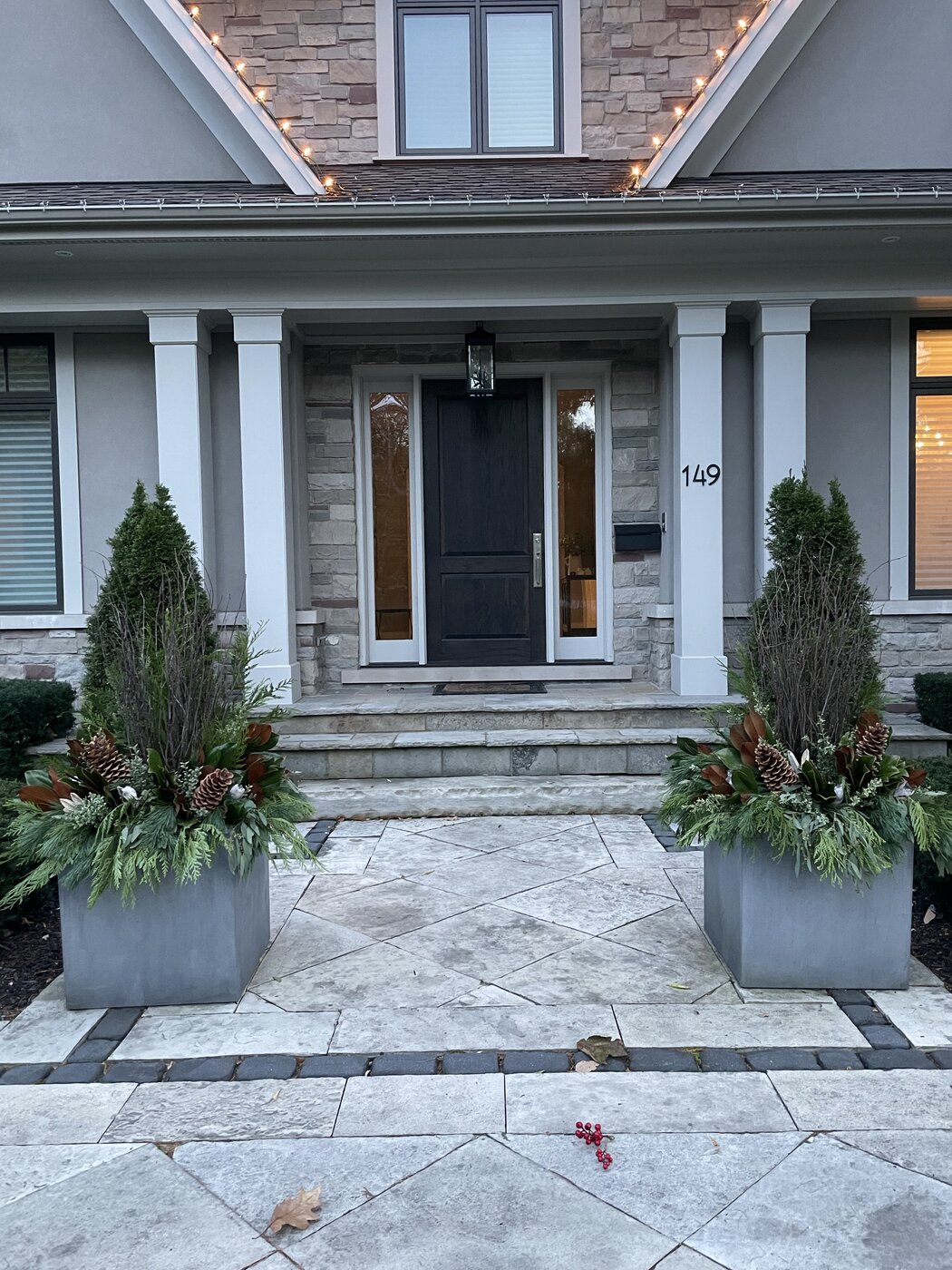
What an evergreen planter actually is
It is a container built around cut evergreen boughs pushed into a frozen or soil-filled base, arranged so it reads as one shape rather than a bundle of branches. The greens are not alive. They do not grow. They hold their colour because they freeze, which is why the timing matters more than the technique.
Build it too early, in a warm November, and the cedar browns before December. Build it after a hard frost and the same cedar will still be green in March.
The three greens that do the work
Cedar
Cedar is the filler. It is soft, it drapes, and it fills the width of a container faster than anything else. It also browns first, so it goes in as the bulk and not as the feature.
Pine
Long-needle pine holds colour longest and gives you the loose, slightly wild edge that keeps a planter from looking like a florist’s arrangement. Use it at the outer edges.
Fir or spruce
Short, stiff, dark. This is the one that reads from the street. A planter built only from cedar looks pale and flat at a distance. A few fir branches through the middle give it depth.
Three greens is the number. Two looks thin. Four starts to look busy and nobody can tell them apart from the sidewalk anyway.
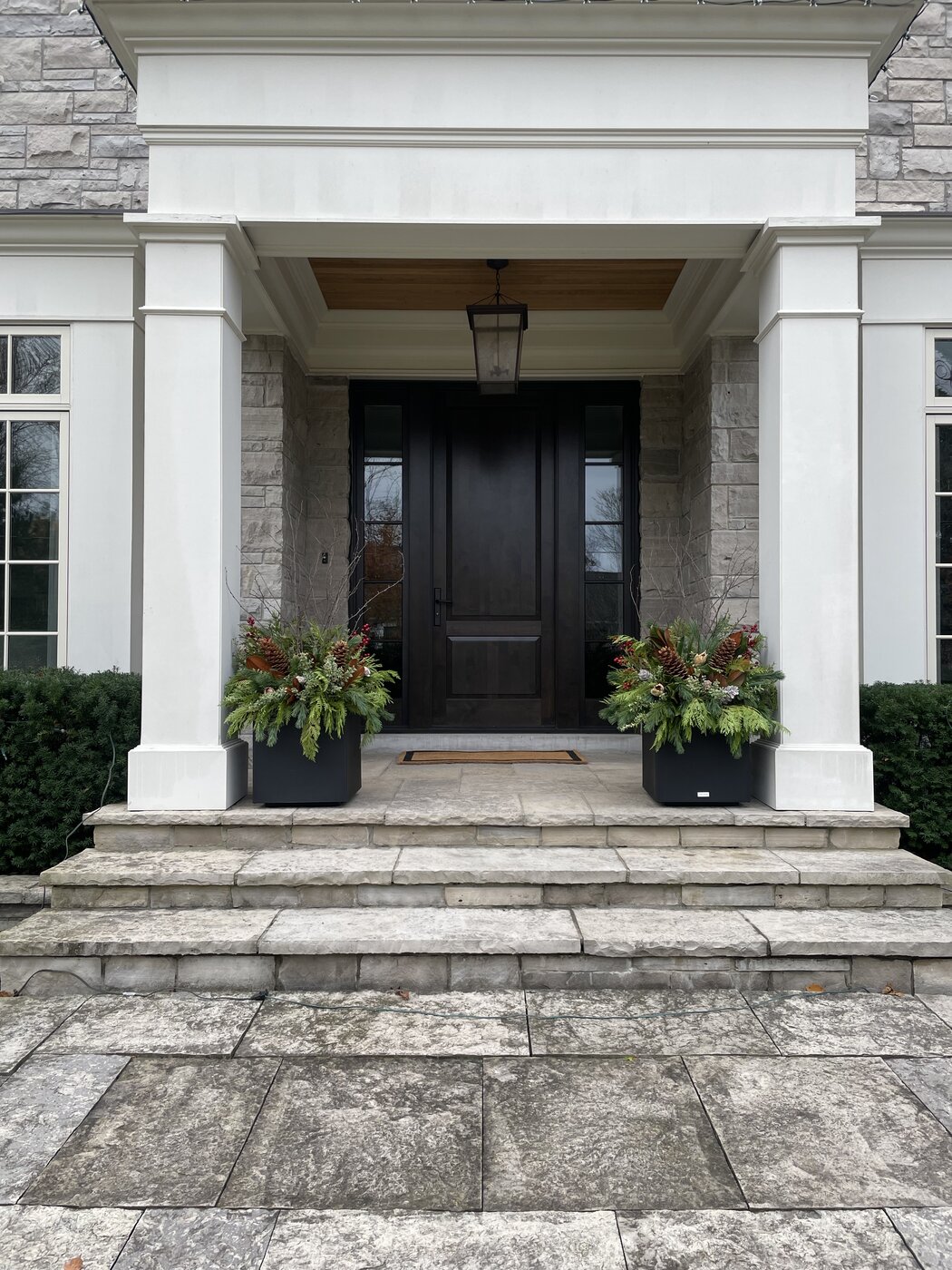
Build it in this order
- Fill the container. Soil, sand, or the old summer soil left in place. It needs to freeze solid, because the freeze is what holds the stems.
- Water it, then let it freeze. This is the step almost everyone skips. A frozen base grips every stem. A dry base lets the whole thing lean out in the first wind.
- Set the height. One tall element at the back, before any greens go in. Birch poles, dogwood, or curly willow.
- Cedar next, around the rim, angled outward and down so it drapes over the edge of the pot rather than sitting inside it.
- Fir through the middle to build depth.
- Pine last, at the outer edges, longer than everything else.
The whole thing takes about twenty minutes per container once the base is frozen. It takes an hour if the base is not.
Getting the proportions right
The height of the tallest element should be roughly one and a half times the height of the container. Shorter than that and the planter looks squat. Much taller and it catches wind and starts leaning by January.
Width matters too. Greens should extend past the rim by about a third of the pot’s width on each side. A planter where the greens stop at the rim looks like a bucket of branches.
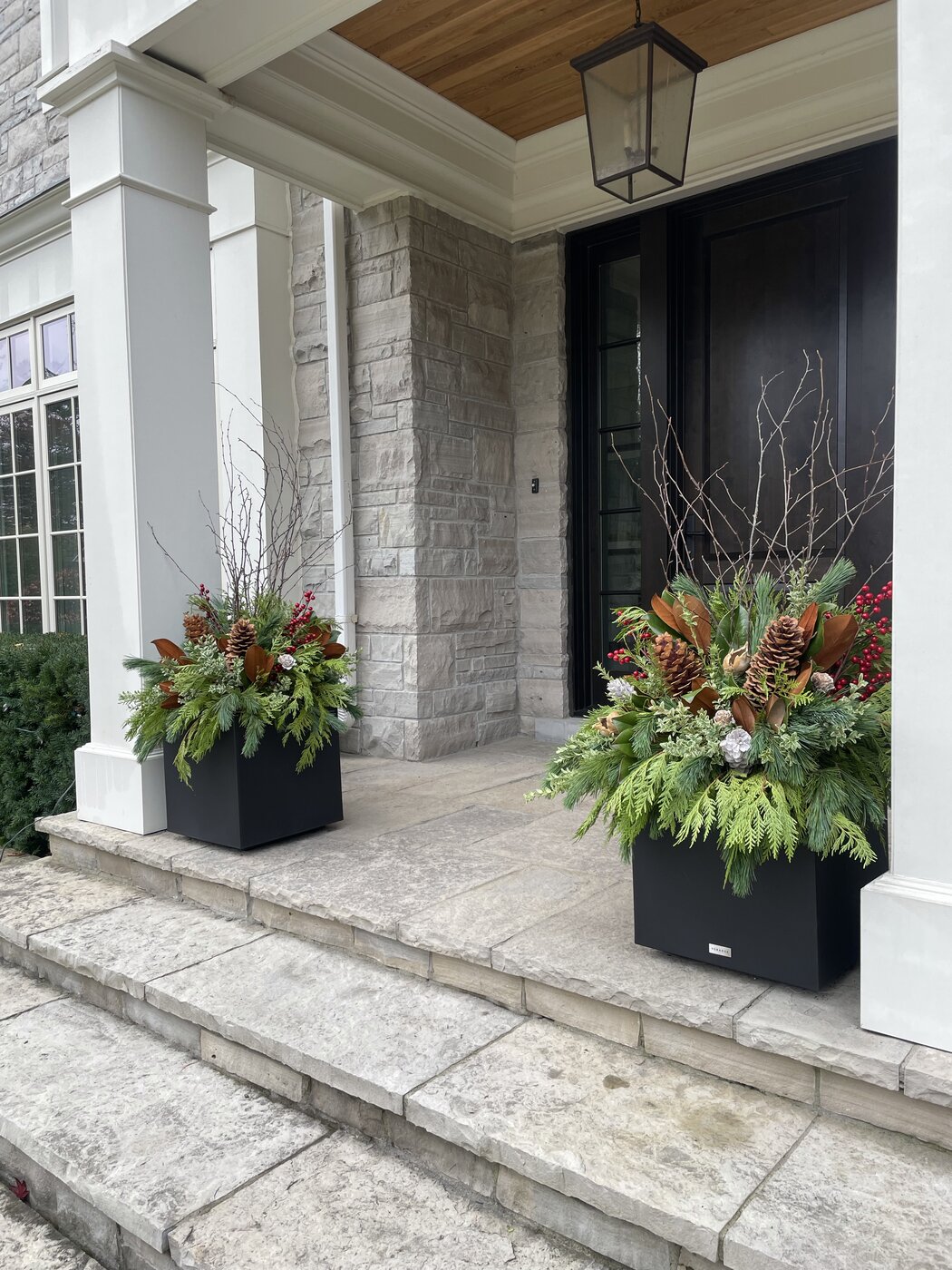
Faux, real, or both
Real greens are cheap, smell right, and are finished by March. Faux greens cost more once, look the same from six feet, and come back out of the same box for a decade.
The answer for most entrances is both. Build the structure in faux, which means the tall stems and the boxwood or cedar forms that hold shape, and fill the rest with real cut greens each year. You get the smell and the freshness without rebuilding from zero.
Some links below are affiliate links. If you buy through them I may earn a small commission, at no cost to you. I only link to things I use or would.
What I would buy
Veradek Fairmont Tall Planter
Crack-resistant in a real freeze, which matters far more than looks once the temperature drops. Standard planters split when the soil inside expands.
Goplus Artificial Cedar Topiary Ball Trees, set of two
The structural piece. These hold the centre of a planter through the whole winter and come back out every year, so the real cut greens only have to fill around them.
Artificial Boxwood Topiary Ball Trees in black pots, 26 inch, UV resistant
For an entrance where you want the same shape on both sides and do not want to rebuild it. UV resistance is the specification that matters; without it they go grey in a season.
Invisible pot feet, 24 pack
Lifts the container off the stone so meltwater drains instead of freezing the pot to the step. Two dollars of prevention against a cracked planter.
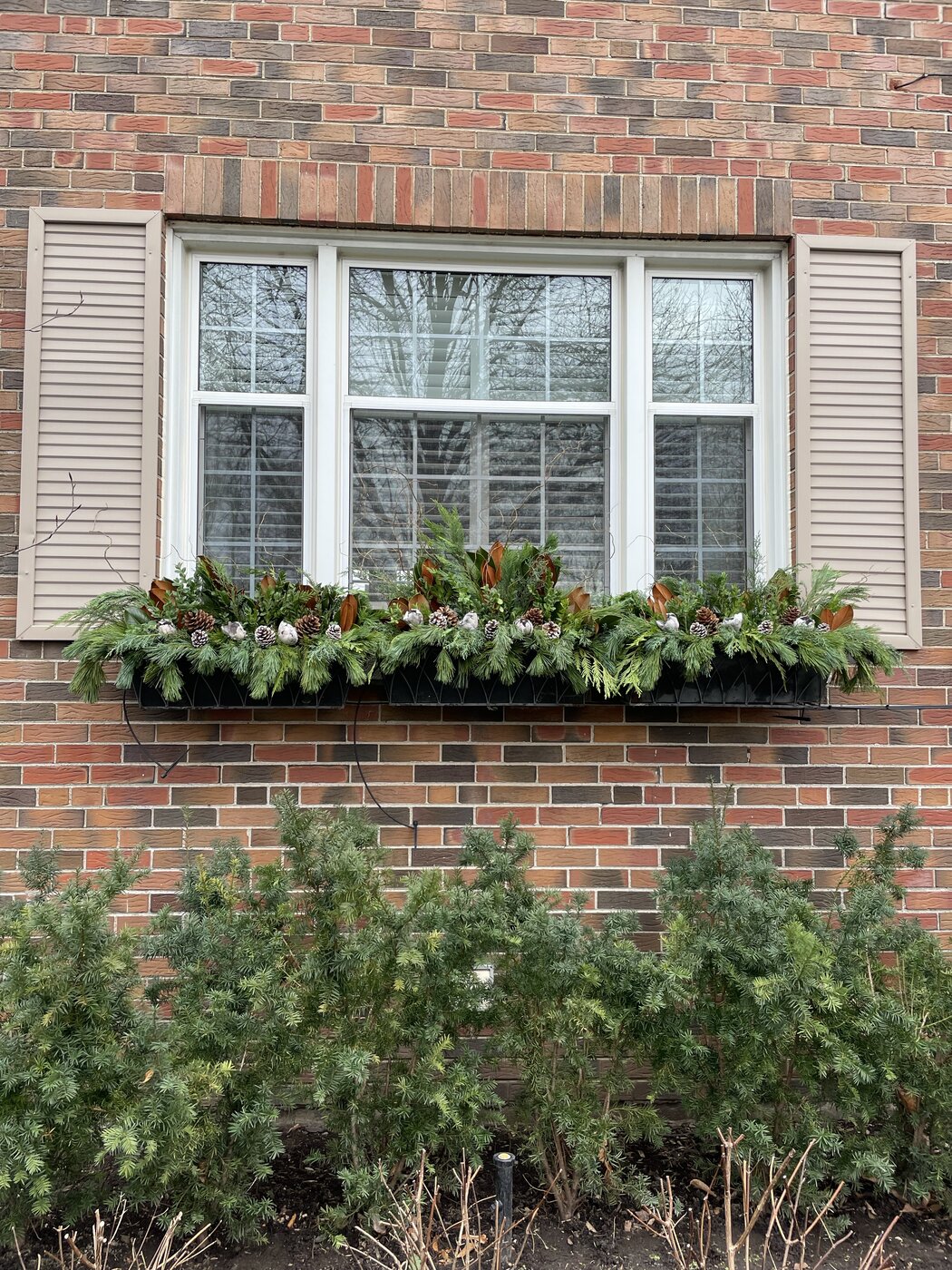
Common mistakes
- Building before a hard frost. The greens dry instead of freezing and brown by mid-December.
- All one green. Flat and pale from the street.
- Stems cut too short. Everything sits inside the rim and the pot dominates.
- Nothing tall. Without a vertical element it reads as a bush, not an arrangement.
- Leaving it undressed. Evergreen alone is handsome but quiet. It needs one accent, and one is enough.
What to do next
If you are building for December, read the Christmas planter guide next, which covers what to add on top of this base. If you want the same container to work in every season rather than just winter, one planter, four seasons walks through the same spot across a year.
Want this done for you? The Custom Porch Planter Design 4-Season Plan is one design drawn for your entrance that covers all four seasons, so you buy once and follow it for a year.